
by admin | Apr 17, 2026 | Best Criminal Lawyer, Blog, Criminal Defence Lawyer, Criminal Lawyers
Introduction
Many people assume that criminal charges will disappear if the person who reported the incident decides they no longer want to pursue the case. In reality, criminal proceedings in Canada do not operate that way. Once police lay charges, the case becomes a matter between the accused and the state, not simply a dispute between two individuals. Prosecutors decide whether a case continues, not the complainant alone.
Understanding how this process works is important for anyone facing criminal allegations. Even if a victim changes their mind, the legal system must still determine whether there is sufficient evidence and whether continuing the case serves the public interest.
Speak with a Best Criminal Defence Lawyer in Edmonton today—call +1 (780)-757-6400
Who Controls a Criminal Case in Canada?
After charges are filed, the authority to proceed with the case shifts to the Crown prosecutor. The Crown represents the public and is responsible for determining whether the prosecution should move forward. This means that the complainant cannot independently cancel or withdraw criminal charges once they have been laid.
The Crown evaluates the available evidence and decides whether there is a reasonable likelihood of conviction. Prosecutors must also consider whether continuing the case is in the public interest. Because criminal law focuses on protecting the broader community, decisions about charges are not based solely on the complainant’s wishes.
Unsure how your case will proceed? Get clarity from a Criminal Charges Lawyer in Edmonton—email [email protected]
What Happens When the Victim Changes Their Mind?
It is not uncommon for a complainant to later decide they no longer want the case to continue. This can happen for many reasons, including emotional stress, family pressures, or a desire to move forward from the situation. However, a change of mind does not automatically end the case.
If the complainant expresses hesitation or refuses to cooperate, the Crown will still review the evidence independently. Prosecutors may proceed if there is other supporting evidence, such as witness testimony, surveillance footage, or physical evidence. In some cases, the Crown may determine that continuing the prosecution is necessary to uphold public safety.
Protect your rights early—connect with the Best Lawyer for Criminal Charges in Edmonton.
When Charges May Be Withdrawn or Stayed
Although a complainant cannot personally drop charges, the Crown does have the authority to withdraw or stay them under certain circumstances. This usually occurs when prosecutors determine that the case does not meet the required legal standard to continue.
For example, charges may be withdrawn if the evidence is weak, inconsistent, or unlikely to lead to a conviction. Similarly, if the complainant refuses to testify and there is little additional evidence, the Crown may reconsider whether to continue the case. Each decision depends on the facts of the situation and the strength of the available evidence.
Find out if your charges can be withdrawn—call +1 (780)-757-6400 for a confidential consultation.
Can a Case Continue Without the Victim?
Yes, criminal cases can continue even if the complainant no longer wishes to participate. Courts recognise that victims may feel pressure or fear that influences their decision to withdraw. Because of this, prosecutors sometimes proceed without relying entirely on the complainant’s testimony.
Evidence such as recorded statements, witness observations, medical reports, or digital communications may still support the prosecution. If the Crown believes there is enough evidence to prove the offence, the case may continue regardless of the complainant’s change of position.
Don’t wait—build your defence strategy with a Criminal Charges Lawyer in Edmonton.
The Importance of Legal Representation
Facing criminal charges can create significant uncertainty, especially when the complainant’s position changes during the process. Understanding how prosecutors evaluate evidence and decide whether to continue a case requires experienced legal guidance.
At Kolinsky Law, we assist individuals who are dealing with complex criminal matters and investigations. Our team includes experienced Best Criminal Defence Lawyer in Edmonton professionals who help clients understand their legal options and build effective defence strategies. As a Best Criminal Lawyer in Edmonton, we focus on protecting our clients’ rights while carefully assessing the strength of the Crown’s case.
See why clients trust us—read our 5-star reviews.
Conclusion
A victim changing their mind does not automatically cause criminal charges to be dropped in Canada. Once charges are laid, the Crown prosecutor controls the case and must decide whether continuing the prosecution is justified. The decision depends on the available evidence and the broader public interest, not solely on the complainant’s wishes. While some cases may be withdrawn if evidence becomes unreliable or insufficient, others may proceed even without the victim’s participation. Understanding this process is essential for anyone facing criminal allegations and navigating the Canadian justice system.
Take the next step—contact Kolinsky Law today or call +1 (780)-757-6400
FAQs
Q1. Can a victim drop criminal charges in Canada?
A1. No, a victim cannot directly drop criminal charges. Once charges are laid, the Crown prosecutor controls the case and decides whether it proceeds based on evidence and public interest.
Q2. What happens if a victim refuses to testify?
A2. If a victim refuses to testify, the Crown may still proceed using other evidence such as witness statements, recordings, or physical evidence. In some cases, the court can compel testimony.
Q3. When will the Crown withdraw criminal charges?
A3. Charges may be withdrawn if there is insufficient evidence, unreliable testimony, or no reasonable likelihood of conviction. Public interest is also a key factor in the decision.
Q4. Can a case continue without the victim?
A4. Yes, criminal cases can continue without the victim if there is enough supporting evidence. Prosecutors may rely on independent proof rather than the victim’s testimony.
Q5. Does changing a statement affect the case?
A5. Changing a statement may impact credibility, but it does not automatically stop the case. The Crown will evaluate all evidence before deciding how to proceed.
Q6. Why is legal representation important in such cases?
A6. A skilled Criminal Charges Lawyer in Edmonton can assess the strength of the Crown’s case, identify weaknesses, and build a strong defence strategy to protect your rights.
Still have questions? Speak directly with a Best Criminal Defence Lawyer in Edmonton — call +1 (780)-757-6400
About the Criminal Defence Lawyers in Edmonton – David Kolinsky
At Kolinsky Law, led by David Kolinsky, we understand how stressful and complex criminal charges can be—especially when circumstances change during a case. As trusted Criminal Defence Lawyers in Edmonton, we provide strategic, personalised legal representation tailored to your situation. Whether you are facing serious allegations or need clarity on your legal options, our team works diligently to protect your rights, challenge the Crown’s evidence, and pursue the best possible outcome for your case.
Get trusted legal guidance today — contact Kolinsky Law at https://kolinsky.ca/ or email [email protected] for a confidential consultation.
#CriminalLawCanada #CriminalDefenceLawyer #EdmontonLawyer #CriminalCharges #LegalAdviceCanada #DefenceLawyer #KnowYourRights #CanadianLaw #CourtProcess #LegalHelp #CriminalJustice #LawFirmEdmonton #LegalSupport #JusticeSystem #KolinskyLaw #DavidKolinsky

by admin | Apr 11, 2026 | Best Criminal Lawyer, Blog, Criminal Defence Lawyer, Criminal Lawyers
Introduction
Being approached by police for questioning can be stressful and confusing. Many people are unsure whether they are required to answer questions or cooperate immediately. In Canada, individuals have important legal rights when interacting with law enforcement, especially when the conversation involves a possible criminal investigation.
Understanding these rights can help prevent misunderstandings and protect you from making statements that could later be used against you. Knowing how to respond calmly and carefully is essential. Whether you are a witness or a potential suspect, taking the right steps early can significantly affect the outcome of a criminal matter.
Unsure how to respond? Speak with our team today at +1 (780)-757-6400
Understanding Why Police May Want to Question You
Police officers may request to speak with someone for many reasons. Sometimes they are gathering information from witnesses, while in other cases, they may believe the individual could be connected to an alleged offence. During an investigation, officers often ask questions to establish timelines, confirm details, or clarify statements made by others.
However, being questioned does not necessarily mean you are guilty or that charges will follow. Investigations often involve speaking with multiple individuals before authorities determine what happened. Still, it is important to recognize that anything you say during questioning may later become part of the investigation.
Protect yourself early—consult a Criminal Defence Lawyer Edmonton now.
Your Right to Remain Silent
One of the most important legal protections in Canada is the right to remain silent. You are generally not required to answer questions from police officers if those questions may involve a potential criminal offence. Exercising this right does not mean you are admitting guilt.
Many people feel pressure to explain themselves or cooperate immediately in hopes of resolving the situation quickly. However, statements made without proper legal guidance can sometimes create complications later. Remaining calm and politely declining to answer questions until you receive legal advice is often the safest approach.
Know your rights before you speak—call +1 (780)-757-6400 for immediate legal advice.
The Right to Speak With a Lawyer
If police want to question you about a crime, you have the right to consult with a lawyer before answering any questions. This right is protected under Canadian law and ensures that individuals understand their legal position before speaking with investigators.
A lawyer can explain the situation, help you understand potential risks, and guide you on how to respond appropriately. Seeking legal advice early can help prevent misunderstandings and ensure that your rights are respected during the investigation process.
Get legal clarity fast—email David Kolinsky at – [email protected]
Avoid Voluntary Statements Without Legal Advice
In many situations, police questioning occurs informally. Officers may ask if you are willing to answer a few questions or provide a written statement. Even though these conversations may seem casual, they can still be used as evidence.
Providing voluntary information without understanding the full context of an investigation can sometimes lead to unintended consequences. It is usually best to avoid making statements until you have spoken with a qualified legal professional who can advise you on the potential implications.
Don’t risk your case—contact our legal team now before making any statements.
How Legal Representation Protects Your Rights
When facing police questioning related to a criminal matter, legal representation can play a critical role in protecting your rights. A lawyer can communicate with investigators on your behalf, explain what information may be required, and help ensure that questioning occurs within proper legal boundaries.
At Kolinsky Law, we assist individuals who are facing criminal investigations or police inquiries. Our team includes experienced Criminal Defence Lawyers in Edmonton who understand how investigations unfold and how statements can affect a case. As a Best Criminal Lawyer in Edmonton, we work to ensure that our clients fully understand their rights before responding to police requests.
Trust top Criminal Lawyers Edmonton—read our 5-star reviews here.
Conclusion
Being questioned by police about a crime can be intimidating, but understanding your legal rights can make a significant difference. Individuals have the right to remain silent and the right to speak with a lawyer before answering questions. Taking time to seek legal advice helps ensure that your rights are protected and that you do not unintentionally complicate the situation. Responding calmly, avoiding unnecessary statements, and obtaining proper legal guidance are important steps when dealing with any criminal investigation. Knowing how to handle police questioning can help you protect your interests and navigate the situation more confidently.
Take control of your situation—call +1 (780)-757-6400 or visit https://kolinsky.ca/ today.
FAQs
Q1. Do I have to answer police questions in Canada?
A1. No, you generally have the right to remain silent. You are not obligated to answer questions that may incriminate you. It is always advisable to consult a Criminal Defence Lawyer Edmonton before responding.
Q2. Can police use what I say against me?
A2. Yes, anything you say during police questioning can be used as evidence in court. Even informal conversations can impact your case, which is why legal advice is crucial before speaking.
Q3. When should I contact a criminal lawyer?
A3. You should contact a lawyer immediately if the police want to question you about a crime. Early legal guidance can prevent mistakes and ensure your rights are protected from the start.
Q4. What happens if I refuse to answer questions?
A4. Exercising your right to remain silent cannot be used as proof of guilt. It is a protected legal right and often the safest course of action until you receive legal advice.
Q5. Can I ask for a lawyer during police questioning?
A5. Yes, you have the right to speak with a lawyer before and during questioning. Police must allow you to consult legal counsel.
Q6. Should I give a written statement to the police?
A6. Not without legal advice. Written statements can have long-term consequences and should only be provided after consulting with a qualified Criminal Defence Lawyer.
Q7. How can a criminal defence lawyer help me?
A7. A lawyer protects your rights, advises you on what to say (or not say), communicates with police on your behalf, and builds a strong defence strategy if charges are laid.
About the Best Criminal Defence Lawyers in Edmonton – David Kolinsky
David Kolinsky and the team at Kolinsky Law are recognised among the Best Criminal Defence Lawyers in Edmonton, providing strategic legal support to individuals facing police investigations and criminal charges. With deep experience in handling complex cases, we guide clients at every stage—from initial police contact to courtroom representation.
Whether you need immediate advice during questioning or strong defence representation, our firm ensures your rights are protected and your case is handled with precision and care. If you are searching for a Criminal Defence Lawyer Edmonton or Top Criminal Lawyers Edmonton, we are here to help you navigate the legal process with confidence.
Speak directly with David Kolinsky today—book your consultation today.
#CriminalDefenceLawyerEdmonton #CriminalLawyersEdmonton #KnowYourRightsCanada #LegalAdviceCanada #PoliceQuestioning #CriminalDefenceCanada #StaySilent #LegalRightsMatter #TopCriminalLawyersEdmonton #LawyerUp #CanadianLaw #CriminalJusticeCanada #LegalHelpEdmonton #DefenceLawyer #KolinskyLaw #DavidKolinsky
by admin | Feb 27, 2026 | Best Criminal Lawyer, Blog, DUI, Impaired Driving Lawyers
Understanding the Terminology in Canadian Law
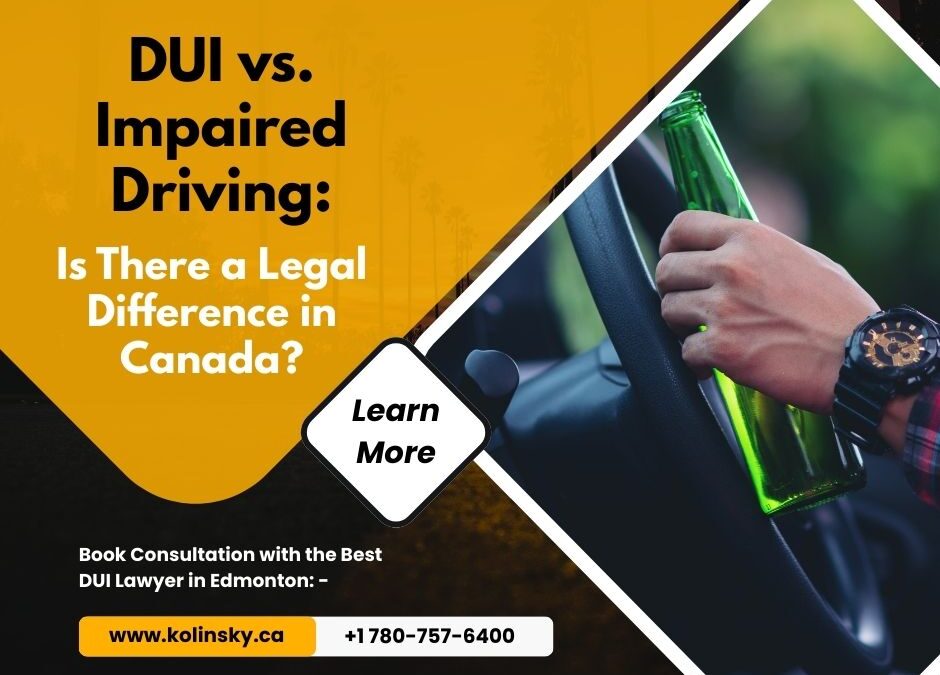
Many people use the terms DUI and impaired driving interchangeably, but there is an important legal distinction in Canada. Unlike some other countries, Canadian law does not officially use the term DUI. Instead, the Criminal Code defines the offence as impaired driving. Despite this, DUI remains a widely used term in everyday conversation to describe operating a vehicle under the influence of alcohol or drugs.
Understanding the difference between common language and legal terminology helps people better recognise how charges are actually classified.
If you’re unsure how your charge is classified, speak directly with a DUI Lawyer Edmonton today at +1 (780)-757-6400.
What Impaired Driving Means in Canada
Impaired driving in Canada refers to operating a motor vehicle while your ability to drive is affected by alcohol, drugs, or a combination of both. This includes having a blood alcohol concentration over the legal limit or showing visible signs that your control, coordination, or judgment is reduced. Impairment can result from alcohol, cannabis, prescription medication, or illegal substances.
The law focuses on whether the driver’s ability to operate a vehicle safely was impacted at the time, not just the presence of a substance in the body.
Charged with impaired driving? Contact our Impaired Driving Lawyers Edmonton at or call +1 (780)-757-6400 for immediate legal guidance.
Why the Term DUI Is Still Common
Although DUI is not a formal legal term in Canada, it is still widely recognised due to media influence and international usage. Many people use it when discussing charges related to drinking and driving, even though Canadian courts and legislation refer specifically to impaired driving offences. This difference in terminology can confuse those trying to understand what they may be charged with.
In legal discussions handled by a Criminal Lawyer Edmonton, the correct charge is always based on impaired driving laws under the Criminal Code.
Get clarity on your specific charge—consult our experienced Impaired/DUI Lawyers Edmonton today.
Types of Impaired Driving Offences
Canadian law outlines several forms of impaired driving offences. These include driving while impaired by alcohol, driving while impaired by drugs, and driving with a blood alcohol level over the legal limit. There are also offences related to refusing to provide a breath sample when requested by law enforcement. Each type of charge is treated seriously and can result in criminal penalties.
The specific circumstances of the incident, such as the level of impairment and whether there was any harm caused, can affect the severity of the outcome.
Facing alcohol or drug-related charges? Call +1 (780)-757-6400 to speak with a trusted DUI Lawyer Edmonton now.
Legal Consequences and Long-Term Impact
The consequences of an impaired driving conviction in Canada can be significant. Penalties may include fines, licence suspension, mandatory driving prohibitions, and possible jail time, especially in repeat cases. A conviction can also result in a permanent criminal record, which may affect employment opportunities, travel, and insurance rates.
Legal professionals, including the Best DUI Lawyers in Edmonton, often focus on reviewing the details of how evidence was collected and whether proper legal procedures were followed during the investigation.
Protect your record and your future—schedule a confidential consultation or email [email protected] today.
Alcohol and Drug Impairment Differences
Both alcohol and drug impairment fall under the same legal framework, but the way they are assessed can differ. Alcohol-related cases often rely on breathalyzer results and blood alcohol concentration levels. Drug-related impairment may involve field sobriety tests, blood samples, or other evaluations. Regardless of the substance involved, the key factor remains whether the driver’s ability to operate the vehicle safely was affected.
This is why every case is assessed based on evidence and observed behaviour at the time of the incident.
Speak with experienced Impaired Driving Lawyers Edmonton who understand both alcohol and drug cases—call +1 (780)-757-6400 now.
Why the Legal Distinction Matters
Understanding the difference between DUI and impaired driving is important because only impaired driving is recognised as an offence under Canadian law. While the term DUI may be used informally, it does not appear in the Criminal Code. Knowing the correct legal definition helps individuals better understand the nature of the charge and the legal process that may follow. Anyone facing such allegations should be aware of the seriousness of the offence and the potential consequences under Canadian law.
Don’t navigate impaired driving charges alone—consult a leading DUI Lawyer Edmonton today.
About the Best Lawyer for Impaired Driving Charges in Edmonton – David Kolinsky
When facing impaired driving allegations, having experienced legal representation can make a critical difference. David Kolinsky at Kolinsky Law is recognised as one of the Most Trusted Criminal Defence Lawyers in Edmonton, with extensive experience defending clients against impaired driving and DUI-related charges.
Our firm carefully examines every detail of your case, including roadside procedures, breath or blood testing accuracy, Charter rights compliance, and evidentiary issues. We build strong, strategic defences tailored to your specific circumstances to protect your rights, freedom, and future.
Call +1 (780)-757-6400 | Email [email protected] | book a confidential consultation | Read our clients’ 5-star reviews.
#DUILawyerEdmonton #ImpairedDrivingLawyersEdmonton #ImpairedDrivingCanada #CriminalDefenceLawyer #EdmontonLawyer #DUICharges #DrinkAndDriveLaw #AlbertaLaw #CriminalCodeCanada #KnowYourRights #LegalHelpEdmonton #DavidKolinsky #KolinskyLaw

by admin | Feb 11, 2026 | Blog, Criminal Defence Lawyer, DUI, Impaired Driving Lawyers
Immediate Roadside Sanctions (IRS) are a core part of Alberta’s impaired driving framework. They allow police officers to impose serious consequences on drivers at the roadside without the need for an immediate criminal charge. The goal is deterrence and public safety, but for drivers, the IRS can be confusing and often feel disproportionate. Understanding how the IRS works is essential for anyone facing a DUI-related stop in Alberta.
Speak with a trusted DUI Lawyer Edmonton today at +1 (780)-757-6400 or book a consultation.
What Are Immediate Roadside Sanctions?
IRS are administrative penalties imposed when a driver fails or refuses a roadside test, or when alcohol or drugs are detected above legal limits. These sanctions apply immediately, before any court process. Although handled under provincial law, their impact can be severe. IRS may be issued for alcohol, cannabis, prescription drugs, or refusal to provide a sample.
The purpose is to remove impaired drivers from the road quickly, not to determine legal guilt or innocence.
Unsure if the IRS applies to your case? Contact Impaired Driving Lawyers in Edmonton at [email protected] for guidance.
Types of IRS in Alberta
Alberta uses a tiered system, depending on the driver’s test result:
- Warn Range (0.05–0.079 BAC): Results in a short-term licence suspension and vehicle seizure.
- Fail (0.08+ BAC or drug impairment): Leads to longer suspensions, mandatory education programs, and significant financial penalties.
- Refusal: Treated the same as a fail and often carries the harshest consequences.
Each level triggers automatic administrative penalties, regardless of whether criminal charges are later laid.
Learn how a Best Impaired Driving Lawyer Edmonton can protect your rights—request a review.
Immediate Consequences for Drivers
The most immediate consequence is losing driving privileges. A first-time fail usually leads to a 90-day licence suspension, followed by a year with an ignition interlock. Vehicles are commonly seized for seven days, with all related costs paid by the driver. Mandatory programs, such as the Planning Ahead Course or Impact Program, must also be completed.
For repeat offences, penalties increase sharply, including longer suspensions, extended interlock periods, and significantly higher insurance premiums lasting several years.
Don’t wait—call experienced DUI Lawyers in Edmonton at +1 (780)-757-6400 to discuss your options.
IRS vs Criminal DUI Charges
A critical point many drivers misunderstand is that the IRS operates independently of criminal proceedings. You can face the IRS even if no criminal charges are laid, and you can also face both at the same time.
Criminal DUI charges are handled in court and can result in fines, probation, or jail time. IRS, on the other hand, is administrative and focuses on driving privileges. This means a driver could be acquitted in criminal court but still suffer the full impact of IRS penalties.
Get clarity from an experienced DUI Lawyer Edmonton—schedule a consultation.
Can the IRS Be Challenged?
Drivers have a very limited time to request a review through SafeRoads Alberta. The review does not assess fairness or personal circumstances, only whether police followed proper procedures and used testing equipment correctly. While errors can lead to sanctions being overturned, most challenges fail due to the broad discretion given to officers.
At Kolinsky Law, we emphasise that IRS reviews are highly technical and evidence-based, where even small procedural mistakes can be decisive if identified and argued promptly.
Act fast—contact Impaired Driving Lawyers Edmonton before deadlines expire.
Long-Term Impact on Insurance and Employment
Beyond the immediate penalties, the IRS can affect insurance rates dramatically. Many drivers are classified as high-risk, leading to premiums that are two or three times higher. Some employers, especially those requiring driving, may view the IRS as a serious liability, even without a criminal conviction.
For commercial drivers, the consequences are even more severe, as the IRS can effectively end a career that depends on maintaining a clean driving record.
Protect your future—speak with a Best Criminal Defence Lawyer in Edmonton at [email protected] today.
Why Legal Guidance Matters
Because the IRS happens instantly, many drivers assume nothing can be done. In reality, the process is legally complex and highly technical. Working with the Best Lawyer in Edmonton for Impaired Driving or a Best Criminal Defence Lawyer in Edmonton can help determine whether the sanctions were lawfully imposed and whether a review is worthwhile.
From our experience at Kolinsky Law, the most serious mistakes occur in the first few days, when drivers delay seeking advice or misunderstand their rights. The IRS may be administrative, but its impact on daily life and finances is significant and long-lasting.
Call +1 (780)-757-6400 or read our 5-star client reviews.
About the DUI Lawyer Edmonton – David Kolinsky & How We Can Help
David Kolinsky is a highly respected DUI Lawyer in Edmonton with extensive experience defending impaired driving and criminal charges. His strategic, evidence-driven approach has helped countless clients reduce penalties, protect their driving privileges, and navigate complex administrative and criminal processes.
At Kolinsky Law, we provide fast, confidential consultations and aggressive representation to challenge IRS sanctions, DUI charges, and related criminal matters. If you or a loved one is facing impaired driving allegations, early legal advice can make a critical difference in your case outcome.
#DUIlawyerEdmonton #ImpairedDrivingLawyersEdmonton #DUIEdmonton #AlbertaDUI #CriminalDefenceEdmonton #ImpairedDrivingAlberta #EdmontonLawyer #DUICanada #LegalAdviceCanada #IRSAlberta #DrivingLawAlberta #DavidKolinsky #KolinskyLaw
by admin | Nov 26, 2025 | Blog, Criminal Defence Lawyer, Criminal Lawyers, DUI, Impaired Driving Lawyers
Introduction
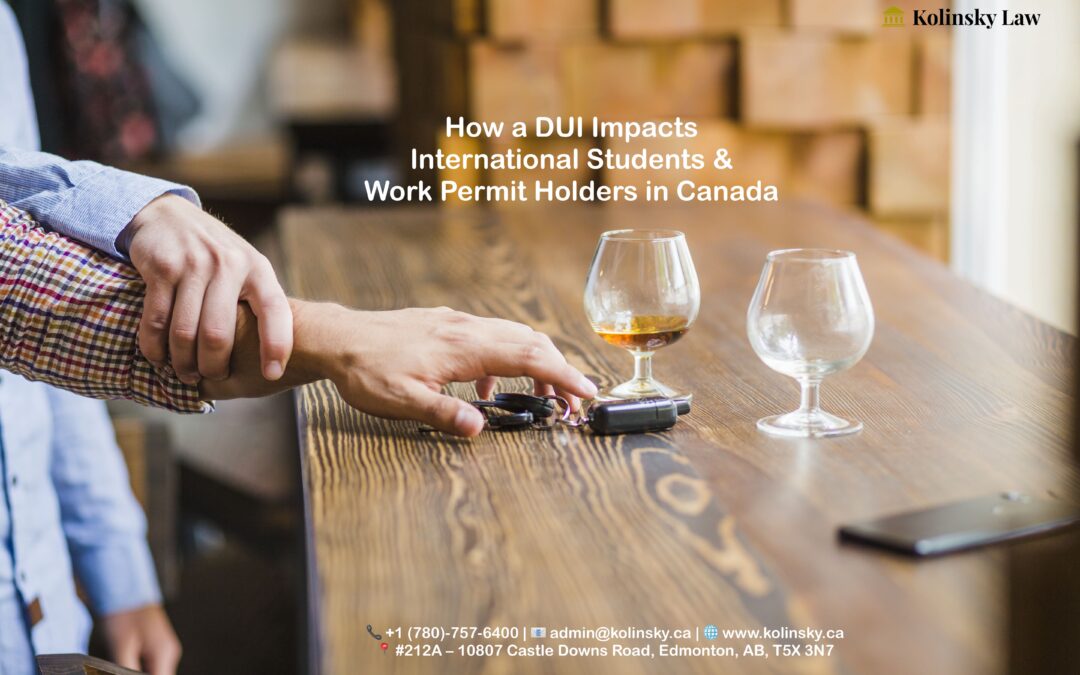
Driving under the influence is a serious criminal offence in Canada. For citizens, penalties often include fines, licence suspensions, or jail time. For international students and work permit holders, the consequences can extend much further. A single impaired driving charge may affect immigration status, academic progress, employment opportunities, and long-term plans to remain in Canada. Understanding how a DUI interacts with immigration rules is essential for anyone holding temporary resident status.
Facing a DUI charge? Don’t risk your status in Canada. Contact our skilled DUI Lawyers in Edmonton for a confidential strategy session at +1 (780)-757-6400.
How a DUI Affects Temporary Immigration Status
International students and foreign workers are temporary residents, and any criminal conviction can trigger concerns about admissibility. Even when the incident appears minor, immigration authorities may re-evaluate a person’s status. A DUI conviction can jeopardise a study permit, work permit, or temporary resident visa because it may be viewed as a public safety issue. Officers also have discretion to deny extensions or refuse re-entry to Canada after travel. The impact varies by case, but the potential consequences are significant.
A DUI can put your entire future in Canada at risk. Secure your status. Speak with our Criminal Defence Lawyers in Edmonton today. Call us at +1 (780)-757-6400 or contact us online.
Impact on Study Permits and Academic Pathways
For international students, a DUI can interrupt academic goals in several ways. Many colleges and universities require students to maintain good legal standing, and a conviction may violate institutional or program-specific rules. If a study permit renewal is refused because of a DUI, the student may have to withdraw from their program.
Fields that involve licensing, clinical placements, or background checks may impose additional barriers. Students in nursing, education, social work, or similar regulated professions may face added scrutiny because these careers rely on public trust.
Protect your academic career and study permit. Our Impaired Driving Lawyers in Edmonton understand the unique challenges students face. Get a case evaluation now.
Consequences for Work Permit Holders
Work permit holders may experience major disruptions after a DUI. Many employers conduct background checks, and a criminal record can affect job stability or promotion opportunities. In positions involving driving, machinery, or safety-sensitive tasks, a DUI conviction may result in immediate disqualification.
Renewing a work permit also becomes more challenging because applicants must prove they remain admissible to Canada. Some individuals seek help from the Best Lawyer in Edmonton for Impaired Driving or the Best Criminal Defence Lawyer in Edmonton when their work status is at risk.
Is your job and work permit on the line? Our firm provides a dual-focused defence for your criminal case and your immigration status. Learn how we can help protect your livelihood.
Risk of Inadmissibility and Removal
One of the most serious consequences of a DUI for non-citizens is the possibility of criminal inadmissibility. If found inadmissible, a person may face removal proceedings or be denied entry into Canada after travel. A single impaired driving conviction can trigger this outcome, especially if aggravating factors are involved, such as accidents causing injuries, very high blood alcohol levels, or repeated offences.
These risks can arise long after the criminal case concludes, which is why understanding both criminal and immigration implications is essential for temporary residents.
Inadmissibility can lead to removal from Canada. Don’t wait until it’s too late. Our Top Criminal Lawyers Edmonton can help you build a strong defence. Call +1 (780)-757-6400 for urgent assistance.
Barriers to Permanent Residency and Citizenship
A DUI can affect long-term immigration plans, including applications for permanent residency. Most immigration programs require applicants to demonstrate good conduct and compliance with Canadian law. A recent impaired driving conviction may delay or jeopardise an application under streams such as the Canadian Experience Class, Provincial Nominee Programs, or family sponsorship.
Citizenship applications can also be impacted because criminal offences may interrupt the required period of lawful behaviour. Individuals planning to settle permanently in Canada must consider how a DUI influences their eligibility timeline.
Don’t let a DUI derail your dreams of permanent residency. Our experienced DUI Lawyer Edmonton team fights for your future in Canada. Schedule your consultation.
Why Early Legal Representation Matters
The immigration consequences of a DUI often extend far beyond the immediate criminal penalties. Early legal guidance helps individuals avoid damaging admissions, understand the evidence, and prepare a defence that considers both criminal and immigration outcomes. At Kolinsky Law, we assess the circumstances of the charge and explain potential impacts on temporary status, work eligibility, and future residency plans.
Time is of the essence. Early intervention by our Best Criminal Lawyer in Edmonton can make all the difference. Protect your rights and your future. Call us now at +1 (780)-757-6400 or email [email protected].
Conclusion
For international students and work permit holders, a DUI carries risks that far exceed those faced by Canadian citizens. It can affect immigration status, academic progress, employment opportunities, and long-term goals for permanent residency. Understanding these hidden consequences is crucial for making informed decisions and effectively addressing the charge. With proper guidance, it may be possible to limit the fallout and preserve future opportunities in Canada.
See why clients trust us. Read our 5-star reviews on our Google My Business page. Then, take the first step towards protecting your future by contacting the Best Impaired Driving Lawyer Edmonton at Kolinsky Law.
About the DUI Lawyer Edmonton – David Kolinsky
When your immigration status and future in Canada are on the line, you need a strategic defence from a top-rated Criminal Defence Lawyer in Edmonton. David Kolinsky, the founding lawyer at Kolinsky Law, brings over a decade of dedicated experience defending the rights of international students and work permit holders facing DUI charges in Edmonton. Recognised as one of the Best Impaired Driving Lawyers in Edmonton, David provides a robust defence strategy that is acutely aware of the profound immigration consequences a conviction can bring. He meticulously builds each case to protect not only your legal rights but also your academic standing, work permit, and pathway to permanent residency. If you are seeking the Best Criminal Lawyer in Edmonton to navigate the complex intersection of criminal and immigration law, contact David Kolinsky and his team for a confidential consultation to discuss your defence.
#DUICanada #ImmigrationCanada #InternationalStudents #WorkPermit
#CriminalInadmissibility #StudyPermit #PermanentResidency #DUILawyer
#EdmontonLawyer #DUI LawyerEdmonton #ImpairedDrivingLawyer
#ImmigrationLaw #LegalAdvice #CanadaImmigration #ProtectYourStatus
#KolinskyLaw #DavidKolinsky
