
by admin | Jan 21, 2026 | Child Custody, Child Custody Lawyer, Divorce, Divorce and Separation, Divorce Attorney, Divorce Lawyer
High-conflict divorce is not a legal label but a practical reality frequently encountered in family courts. These cases are marked by persistent hostility, repeated applications, poor communication, and an inability to resolve even minor parenting issues. Alberta courts recognise that prolonged parental conflict can be more damaging to children than separation itself.
As a result, judges focus less on assigning blame between parents and more on limiting a child’s exposure to ongoing disputes. At Kolinsky Law, we see that court responses in high-conflict cases are grounded in experience, evidence, and child-focused risk management.
Facing a complex divorce? Secure your child’s future. Call Kolinsky Law at +1 (780)-757-6400.
How Courts Identify High-Conflict Cases
Courts identify high-conflict dynamics through patterns rather than isolated incidents. Repeated emergency motions, allegations that shift over time, refusal to comply with orders, and communication that escalates rather than resolves issues all signal concern. Judges also review how parents involve children in disputes, including disparaging comments or pressure to take sides. The Best Divorce Lawyer Edmonton often advises clients that conduct during litigation is closely monitored, as it directly informs how the court structures future parenting arrangements.
Your conduct in court matters. Let an Edmonton Divorce Lawyer guide you strategically.
The Central Role of the Child’s Best Interests
In high-conflict matters, the child’s best interests are assessed through a harm-reduction lens. Courts ask whether ongoing parental interaction places the child at emotional or psychological risk. Stability, predictability, and emotional safety take precedence over parental preferences. Judges are less concerned with equal parenting time and more focused on whether the child can maintain healthy relationships without being drawn into conflict.
Prioritise your child’s emotional safety. Consult our Child Custody Lawyer in Edmonton today.
Court-Ordered Parenting Structures
To reduce exposure to conflict, courts frequently impose structured parenting regimes. These may include parallel parenting orders, which limit direct communication and assign clear decision-making authority. Exchanges may be restricted to neutral locations or supervised settings. Detailed schedules reduce ambiguity and opportunities for dispute. Edmonton’s Top Child Custody Lawyer understands that these orders are not punitive but practical tools developed through years of judicial experience with high-conflict families.
Need clarity on parenting orders? Explore our resources.
Limits on Communication and Decision-Making
Courts often regulate how parents communicate. Orders may require the use of parenting apps, written-only communication, or strict boundaries around topics of discussion. In extreme cases, one parent may be granted sole decision-making authority for education or medical care to prevent stalemates. Judges assess whether shared decision-making is workable; if not, they prioritise efficiency and the child’s well-being over formal equality.
Struggling with co-parenting communication? We can help. Email us at [email protected].
Use of Professionals and Court Resources
In high-conflict cases, courts regularly rely on third-party professionals. Parenting assessors, child psychologists, and family justice counsellors provide insight into family dynamics and child impact. These professionals do not replace the court’s role but assist judges in understanding risk and crafting effective orders. Where appropriate, courts may order parenting coordination to manage ongoing disputes outside the courtroom.
Complex case needing expert input? Let’s discuss your situation. Contact us via our form.
Enforcement and Consequences for Non-Compliance
When conflict persists despite clear orders, courts turn to enforcement. Repeated non-compliance can result in reduced parenting time, cost consequences, or, in rare cases, contempt findings. Courts are particularly firm when behaviour undermines a child’s relationship with the other parent. Divorce Lawyer in Edmonton frequently cautions that ongoing defiance of court orders is viewed as evidence of poor judgment, not commitment to the child.
Concerned about order enforcement? Protect your rights. Call +1 (780)-757-6400 now.
Why Courts Avoid Endless Litigation
Judges are acutely aware that prolonged litigation fuels conflict. Courts increasingly seek finality by issuing comprehensive, long-term orders rather than incremental adjustments. This approach limits repeated court involvement and provides children with consistency. The objective is not to resolve parental conflict, but to contain it so children can develop outside the dispute.
Seek a final, stable order for your child. Read our 5-star reviews and see why clients trust us.
Conclusion
High-conflict divorce requires courts to act decisively and pragmatically. Alberta judges rely on observed behaviour, professional input, and enforceable structures to protect children from ongoing parental disputes. The legal system’s response is shaped by real-world experience, with the child’s stability as the guiding principle. At Kolinsky Law, we approach these cases with a clear understanding of how courts move from conflict management to child protection, ensuring decisions are rooted in reality rather than theory.
Ready for pragmatic legal support? Start with a consultation: Click to fill the form.
About David Kolinsky – Best Child Custody and Divorce Lawyer in Edmonton
David Kolinsky is a dedicated family law advocate focused on navigating high-conflict divorce and custody cases in Edmonton. With a deep understanding of how Alberta courts prioritise child protection, David provides strategic, evidence-based representation designed to reduce conflict and secure stable, enforceable parenting arrangements. He leverages judicial trends and professional resources to shield children from parental disputes, ensuring your case is built on practical legal experience, not just theory. Whether you need a skilled negotiator or a strong courtroom advocate, David Kolinsky can help you navigate this challenging process with clarity and purpose.
#FamilyLaw #CanadianFamilyLaw #AlbertaFamilyLaw #LegalAdvice #LawyerLife #CoParenting #SharedParenting #ChildAdvocacy #ChildrensRights #ParentalAlienation #HealthyCoParenting #EdmontonFamilyLawyer #AlbertaLaw #ChildCustodyLawyer #DivorceLawyer #LegalHelpEdmonton #ConflictResolution #ParallelParenting #CourtOrder #ParentingPlan #BestInterestOfTheChild #StructuredParenting #Litigation #KolinskyLaw #DavidKolinsky #EdmontonExpert #TrustedLawyer

by admin | Dec 17, 2025 | Blog, Child Custody, Child Custody Lawyer, Divorce and Separation, Divorce Attorney, Divorce Lawyer
Divorce is one of the most disruptive legal processes a person can experience, and in Alberta, even minor errors can lead to lasting financial, legal, and parenting consequences. Many people enter the process without fully understanding how decisions made early on can affect outcomes months or even years later. Acting on emotion, delaying critical steps, or relying on incomplete information often complicates matters unnecessarily.
Misunderstandings about rights, obligations, and court expectations can escalate conflict and increase costs. A clear, informed approach helps individuals navigate separation more effectively, reduce uncertainty, and make decisions that align with Alberta’s family law framework rather than short-term pressure or assumptions.
Get clarity on your rights. Call our Edmonton office at +1 (780)-757-6400 today.
Letting Emotions Control Legal Decisions
Divorce is emotional by nature, but decisions driven by anger, fear, or resentment often lead to poor outcomes. We see clients refuse reasonable settlements simply to “win”, only to spend more time and money in court for a similar result. Alberta courts focus on fairness and the best interests of children, not punishment. A measured approach allows your lawyer to advocate strategically rather than react defensively, which often benefits you in the long run.
Move forward with a strategic advocate. Contact us at [email protected].
Failing to Understand Alberta Divorce Law
Many people assume divorce rules are the same everywhere or rely on advice from friends and online forums. In reality, Alberta family law has specific rules around property division, support, and parenting arrangements. Without proper legal guidance, individuals may agree to unfair terms or miss key entitlements. Speaking with a Family Divorce Lawyer Edmonton residents trust ensures you understand your rights and obligations before making binding decisions.
Understand Alberta’s specific laws. Consult a trusted Divorce Lawyer in Edmonton.
Hiding or Minimising Financial Information
Attempting to conceal income, assets, or debts is a serious mistake. Full financial disclosure is mandatory in Alberta divorces, especially where child or spousal support is involved. Courts can impose penalties, reopen settlements, or question credibility when dishonesty is discovered. Transparency allows negotiations to proceed efficiently and protects you from long-term legal exposure.
Protect yourself with full transparency. Get expert guidance via our contact form.
Ignoring the Impact on Children
Parents often underestimate how closely courts scrutinise parenting conduct during divorce. Speaking poorly about the other parent, limiting access without justification, or involving children in adult disputes can severely harm your case. Alberta law prioritises stability and cooperation. Consulting a Child Custody Lawyer Edmonton families rely on can help you create parenting arrangements that align with legal expectations while supporting your child’s emotional well-being.
Prioritise your child’s stability. Learn more about custody solutions here.
Delaying Legal Advice
Some individuals wait until conflict escalates before contacting a lawyer, believing they can handle matters privately. Unfortunately, early decisions such as moving out, agreeing verbally to custody terms, or dividing property informally can affect your legal position. At Kolinsky Law, we emphasise early advice because timely guidance often prevents costly mistakes and unnecessary litigation.
Avoid costly delays. Call +1 (780)-757-6400 for early advice.
Overlooking Long-Term Consequences
Divorce agreements are not just about the present moment. Support obligations, parenting schedules, and property settlements can affect your finances and lifestyle for years. Rushing to “get it over with” may result in agreements that no longer work as circumstances change. Careful planning with experienced counsel helps ensure outcomes remain workable and enforceable over time.
Plan for the long term. Email us at [email protected] to start.
Choosing the Wrong Legal Representation
Not all lawyers approach divorce with the same focus or experience. Choosing counsel unfamiliar with Alberta family law or high-conflict cases can limit your options. Working with a firm that handles divorce matters daily allows for informed strategy, clear advice, and realistic expectations. Our role at Kolinsky Law is to guide clients through difficult decisions with clarity, discretion, and strong legal advocacy.
Divorce is rarely simple, but avoiding these mistakes can significantly reduce stress and uncertainty. With informed choices and proper legal support, it is possible to move forward with stability and confidence while protecting what matters most.
Choose experienced representation. Read our 5-star client reviews here.
About Divorce Lawyer Edmonton – David Kolinsky
At Kolinsky Law, founding lawyer David Kolinsky provides clear, strategic guidance through every aspect of Alberta family law. We help you avoid common pitfalls by offering assertive advocacy focused on your long-term well-being and fair outcomes. From complex financial divisions to sensitive parenting plans, our approach is designed to reduce conflict, protect your interests, and navigate the legal process with confidence.
How We Can Help:
We provide dedicated legal support for divorce, separation, child custody, support, and property division in Alberta. By understanding your unique situation, we develop strategies to secure stable, enforceable agreements and court orders. Let us help you make informed decisions and move forward with clarity.
#DivorceAlberta #AlbertaFamilyLaw #EdmontonDivorceLawyer #ChildCustodyAlberta #DivorceMistakes #FamilyLawyer #KolinskyLaw #AlbertaDivorce #ParentingPlans #LegalAdviceEdmonton #DavidKolinsky

by admin | Nov 24, 2025 | Blog, Co-Parenting, Divorce, Divorce and Separation, Divorce Attorney, Divorce Lawyer, Family Divorce Lawyer
Introduction
Co-parenting becomes significantly more complex when parents live in different cities or provinces because distance affects how responsibilities are shared and how frequently in-person parenting time can occur. Relocation for work, education, or family support often requires families to rethink routines, communication methods, and travel arrangements.
Long-distance parenting plans must account for school schedules, transportation logistics, and the child’s developmental needs to remain effective. When expectations are clearly defined and both parents understand how decisions will be made, children can maintain strong relationships with each parent despite the geographical separation.
Navigating a long-distance co-parenting plan? Let our experienced Edmonton Divorce Lawyers provide the clarity you need. Contact Us Today.
Why Long-Distance Parenting Plans Are Increasing
The number of families managing parenting schedules across regions has grown due to changes in employment demands, increasing mobility, and rising educational opportunities. Many industries require rotational work or extended travel, and some parents must relocate to secure financial security after separation.
These situations make traditional week-to-week parenting schedules impossible. A well-structured long-distance plan adapts to these realities while prioritising the child’s needs. As experienced Edmonton Divorce Lawyers, we guide parents through the decisions that matter most so they can prepare a plan that works long term.
Need a long-term parenting plan that works? Schedule a consultation with a trusted Family Divorce Lawyer in Edmonton. Call us at +1 (780)-757-6400.
Key Challenges When Parents Live in Different Regions
Long-distance co-parenting introduces logistical and emotional challenges that require careful planning. Travel time limits how often in-person visits can occur, so the schedule must focus on longer, meaningful periods rather than short, frequent transitions. Parents must consider school calendars, extracurricular programs, and the child’s developmental stage.
Clear rules around transportation, cost sharing, and communication prevent misunderstandings that can lead to conflict. Without specific terms, disagreements become more likely. Families often reach out to a Family Divorce Lawyer Edmonton parents trust to help prevent these issues and create a detailed plan that reduces uncertainty.
Avoid conflict with a clear, detailed plan. Speak with the Best Divorce Lawyers in Edmonton Alberta. Get Expert Guidance.
Creating a Practical Long-Distance Parenting Schedule
The most effective long-distance parenting schedules balance predictability with the flexibility needed to manage travel. Many families choose a school-year and holiday structure, where the child primarily resides with one parent during the academic year and spends extended vacation time with the other. Others alternate long weekends, monthly visits, or seasonal rotations if distance allows. Every plan must account for travel delays, weather conditions, and unforeseen events.
At Kolinsky Law, we focus on designing schedules that prioritise consistency so children feel secure while still ensuring both parents remain closely involved.
Create a child-focused schedule that provides stability. Our Divorce Lawyer Edmonton team is here to help. Call +1 (780)-757-6400.
Using Technology to Maintain Strong Parent-Child Bonds
Technology is a powerful support tool in non-traditional parenting plans. Video calls, shared calendars, messaging platforms, and virtual school meetings allow children to maintain everyday contact with the parent who lives farther away. Regular communication routines help reduce feelings of separation and keep parents informed about school performance, medical needs, and important milestones.
When used properly, technology strengthens the parent-child bond and complements physical parenting time. A structured communication plan ensures expectations are clear and that contact remains meaningful rather than sporadic.
Ensure your communication plan is legally sound. Let Kolinsky Law, your trusted Divorce Attorney in Edmonton, draft an enforceable agreement. Reach Out Now.
Important Legal Considerations
Relocation between cities or provinces often involves legal requirements, including notice, consent, and potential court hearings if parents disagree on the move. Parenting plans must address decision-making authority, conflict-resolution methods, and detailed travel arrangements.
Courts examine whether each parent can support the child’s relationship with the other and whether the plan is practical and child-focused. Parents often consult the Best Divorce Lawyers in Edmonton Alberta, or an experienced Divorce Attorney in Edmonton to ensure their rights and responsibilities are fully protected. At Kolinsky Law, we prepare parents for these legal steps and help them create enforceable and child-centred solutions.
Facing a relocation or legal dispute? Protect your rights and your child’s well-being. Contact our Edmonton Divorce Lawyers at [email protected].
Conclusion
Non-traditional parenting plans require thoughtful structure, open communication, and strong legal support. Distance does not prevent parents from building meaningful relationships with their children, but success depends on planning and cooperation.
At Kolinsky Law, we help families establish long-distance parenting arrangements that promote stability, minimise conflict, and support the child’s well-being. With the right approach, children can thrive while maintaining enriching relationships with both parents, regardless of where each parent lives.
Ready to build a stable future for your child? See why clients trust us. Read Our 5-Star Reviews and then Contact Our Team.
About the Divorce Attorney Edmonton – David Kolinsky
David Kolinsky, founder of Kolinsky Law, is a dedicated Divorce Attorney in Edmonton with extensive experience in crafting practical, child-centred parenting plans for families navigating separation across cities and provinces. He understands the unique legal and logistical challenges of long-distance co-parenting. At Kolinsky Law, we help you secure a comprehensive and enforceable agreement that protects your child’s best interests, minimises future conflict, and provides a clear path forward for your family. Let us guide you through this complex process with expertise and compassion.
by admin | Oct 17, 2025 | Child Custody Lawyer, Divorce Attorney, Divorce Lawyer, Family Law Lawyer
Understanding Parenting Models After Divorce
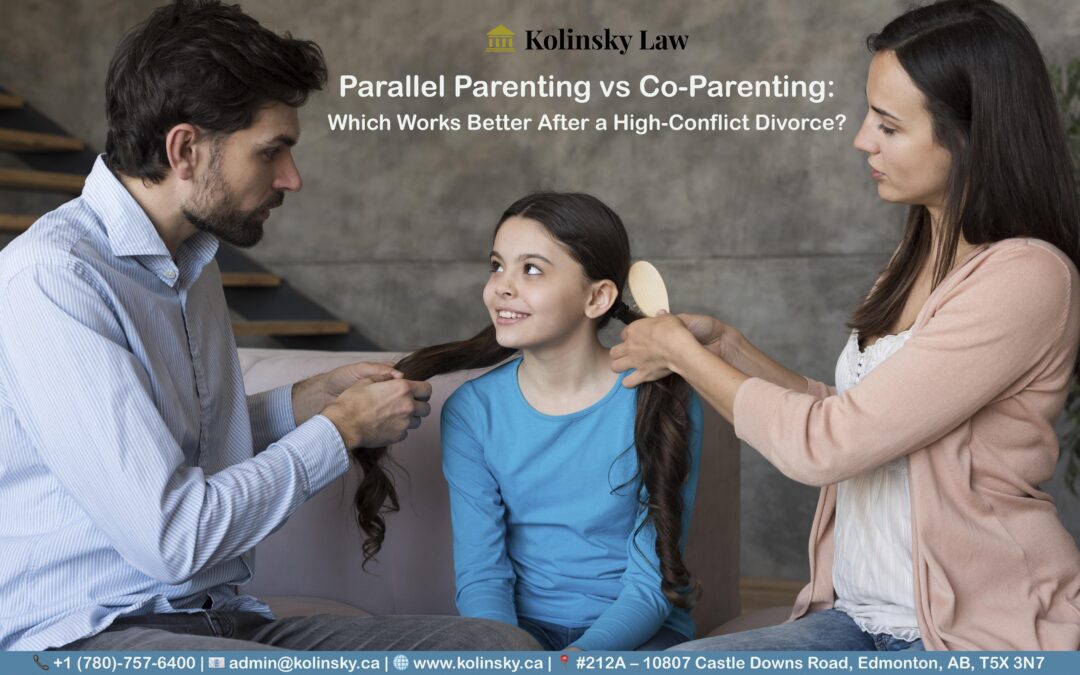
When a marriage ends on tense terms, the emotional fallout can be significant for both parents and children. In such cases, managing shared parenting becomes one of the most complex aspects of post-divorce life. The way parents choose to divide responsibilities and communicate after separation can directly affect a child’s emotional and psychological well-being.
Two common parenting frameworks often emerge in these situations: co-parenting and parallel parenting. While both aim to maintain strong relationships between children and each parent, they differ in structure, communication style, and effectiveness—especially when conflict remains high. Understanding these differences is crucial to creating a stable environment for the child.
Struggling to choose a parenting model? Our Family Law Lawyers in Edmonton can help you build a stable, child-focused plan. Schedule your consultation today!
What is Co-Parenting?
Co-parenting requires active communication and collaboration between parents after divorce. Both parents continue to make joint decisions about their child’s education, healthcare, and routines. Ideally, this arrangement promotes consistency and a sense of security for the child. When parents can communicate respectfully, co-parenting can be highly beneficial—children feel supported, experience less stress, and witness positive role modelling.
However, for couples whose relationship remains hostile, co-parenting can become emotionally harmful. Constant disputes and unresolved anger can turn simple conversations into arguments. In our experience as Family Divorce Lawyers in Edmonton, we’ve seen that high-conflict co-parenting often results in children feeling anxious, torn between loyalties, or directly exposed to parental hostility.
Is constant conflict harming your co-parenting efforts? Let our experienced Edmonton Divorce Lawyers guide you toward a healthier solution. Contact us for expert advice.
What is Parallel Parenting?
Parallel parenting takes a different approach. Instead of requiring constant communication, it minimises interaction between parents while maintaining strong, separate relationships with the child. Each parent independently manages their own household rules and routines, limiting the potential for conflict. Communication is typically restricted to essential matters and often handled through written means or parenting apps.
For families where communication consistently breaks down, parallel parenting can provide much-needed peace. Children benefit from reduced tension, and parents can focus on their roles without emotional confrontation. Courts in Alberta often recommend this arrangement when co-parenting is unworkable due to repeated conflict, harassment, or emotional manipulation. Our Edmonton Divorce Lawyers frequently help clients structure clear, court-approved parallel parenting plans that outline schedules, communication boundaries, and responsibilities.
Need a peaceful, structured parenting plan? Our Child Custody Lawyers in Edmonton, Alberta specialise in creating effective parallel parenting agreements. Call us at +1 (780)-757-6400.
Legal and Psychological Considerations
Alberta courts prioritise the best interests of the child and often recommend structured parenting plans when conflict threatens emotional stability. In high-conflict cases, parallel parenting plans clearly outline schedules, decision-making authority, and communication rules to reduce disputes.
From a psychological perspective, children exposed to constant parental conflict face higher risks of anxiety and behavioral issues. Limiting parental interaction through parallel parenting can protect their well-being, while cooperative parents may benefit more from co-parenting, which fosters consistency and emotional security across both homes.
Protect your child’s well-being with a legally sound parenting plan. Consult with the Best Divorce Lawyers in Edmonton, Alberta at Kolinsky Law. Get the clarity you need now!
Choosing What Works Best for Your Family
There is no universal answer to which approach works better. The right choice depends entirely on the parents’ ability to communicate. If both parties can remain respectful and cooperative, co-parenting allows children to thrive with shared decision-making and unity. But if conflict is persistent and communication breaks down, parallel parenting becomes a healthier solution that prioritises peace and emotional safety.
Kolinsky Law assists families in evaluating their circumstances and creating parenting arrangements that protect their children’s well-being. Whether you are at the beginning of a custody dispute or require guidance in establishing a structured parenting plan, our experienced Divorce Attorneys in Edmonton and Child Custody Lawyers in Edmonton, Alberta, provide the legal support and clarity needed throughout the process.
Ready to create a parenting plan that puts your child first? Our Family Law Lawyers in Edmonton are here to support you. Book your consultation online!
How Kolinsky Law Can Help
Every family’s dynamic is unique. That’s why we tailor parenting plans based on the specific emotional, legal, and logistical challenges you face. As one of the Best Divorce Lawyers in Edmonton, Alberta, we provide clear, compassionate, and strategic legal advice to help you transition into post-divorce parenting with confidence.
Our team of Family Law Lawyers in Edmonton focuses on reducing conflict, protecting your parental rights, and ensuring your child’s stability remains at the heart of every decision.
Don’t navigate post-divorce parenting alone. Trust Kolinsky Law, your dedicated Family Divorce Lawyers in Edmonton. Email us at [email protected] to get started.

by admin | Sep 24, 2025 | Blog, Divorce, Divorce and Separation, Divorce Attorney, Divorce Lawyer, Divorce Mediation, Family Divorce Lawyer
Introduction
Family conflicts are often complex, particularly when they involve divorce, child custody, or long-standing disputes between parents. Traditional court processes can be time-consuming, expensive, and emotionally draining, which is why alternative methods of dispute resolution are encouraged. Understanding the comparison of Mediation Vs. Restorative Justice is crucial, as these two approaches are frequently considered in family matters.
While both aim to reduce conflict outside of court, they differ in focus and method. Mediation is designed to help parties reach agreements on practical issues, whereas restorative justice seeks to repair harm and rebuild trust within relationships. Understanding these distinctions is important for families deciding how best to address their conflicts.
Unsure which path is right for your family’s unique situation? Contact our Edmonton Divorce Lawyers today for a confidential consultation to explore your options. Call us at 📞 +1 (780)-757-6400.
What is Mediation?
Mediation is a structured process where a neutral third party facilitates discussions to help people in conflict communicate and find solutions. The mediator does not make decisions but guides both sides toward a mutually acceptable agreement. In family law, mediation is often used to develop parenting plans, set custody schedules, or resolve financial disputes.
It emphasises future arrangements rather than revisiting past issues, giving parents more control and reducing time in court. Mediation is most effective when both parties negotiate in good faith but can be less useful when power imbalances or persistent unwillingness to compromise exist.
Considering mediation to resolve your family dispute? Our skilled mediators at Kolinsky Law can guide you toward a fair and practical agreement. Learn more about our process here: Mediation Services in Edmonton.
What is Restorative Justice?
Restorative justice focuses on addressing harm rather than simply reaching an agreement. It brings together those affected, often parents and sometimes children, to discuss what happened, how each person was impacted, and what can be done to repair the damage.
Guided by a trained facilitator, the process promotes understanding, accountability, and rebuilding trust where relationships have broken down. It is particularly valuable when emotional harm or resentment prevents families from moving forward. Unlike mediation, restorative justice does not always result in a formal agreement but aims to reshape relationships, creating a stronger foundation for cooperation in the future.
Is emotional healing needed for your family to move forward? Discuss the potential of restorative justice with our compassionate team. We help families in Edmonton rebuild trust. Schedule a conversation today.
Comparing the Two Approaches
Although mediation and restorative justice share the goal of reducing conflict outside of court, their methods and outcomes differ significantly.
- Focus: Mediation is primarily solution-driven, while restorative justice is relationship-driven.
- Timeframe: Mediation concentrates on current and future issues, while restorative justice looks backward to address past harms.
- Outcome: Mediation often results in written agreements, whereas restorative justice may produce commitments that are more personal or emotional in nature.
- Suitability: Mediation is generally best for families seeking quick, practical resolutions. Restorative justice works better when unresolved emotional issues are preventing constructive dialogue.
Both methods require the willingness of participants to engage honestly. If one party is uncooperative or abusive, the court may need to step in.
Need clarity on whether mediation or restorative justice suits your conflict? Our experienced Family Divorce Lawyer Edmonton can provide a clear, professional assessment. Call us help you choose the right path – 📞 +1 (780)-757-6400.
Choosing the Right Process
Deciding between mediation and restorative justice depends on the nature of the conflict. For disputes focused on custody schedules or property division, mediation is often the most efficient choice. For conflicts rooted in long-standing resentment or broken trust, restorative justice may provide the emotional repair needed before practical agreements can succeed.
Families in Edmonton who are uncertain about the right approach often consult legal professionals. An experienced Divorce Attorney in Edmonton can explain how each process fits within Alberta’s family law framework and advise on which option may offer the best results for a given situation.
Ready to resolve your family conflict with clarity and confidence? Visit our office at #212A – 10807 Castle Downs Road, Edmonton, AB, T5X 3N7 or message us online to book an appointment with a leading Divorce Lawyer in Edmonton.
Conclusion
Restorative justice and mediation both provide valuable alternatives to courtroom battles in family conflicts. Mediation is effective for reaching structured, enforceable agreements on immediate issues, while restorative justice focuses on repairing relationships and fostering long-term cooperation.
Neither method is universally “better.” The right choice depends on the family’s circumstances, the nature of the conflict, and the desired outcomes. By carefully evaluating their situation and seeking legal guidance when necessary, families can select the process that best supports their needs and protects the well-being of their children.
Don’t navigate this difficult decision alone. Contact Kolinsky Law, your trusted Divorce Attorney Edmonton, for expert guidance. Call +1 (780)-757-6400 or find us on Google My Business.
About David Kolinsky – Best Divorce Lawyers in Edmonton Alberta
At Kolinsky Law, we understand that family conflicts are more than just legal issues—they are deeply personal matters that affect your future and your children’s well-being. David Kolinsky, a leading Divorce Lawyer in Edmonton, brings a compassionate yet strategic approach to every case. With extensive experience in both mediation and collaborative law, he is dedicated to helping Alberta families find respectful, out-of-court solutions that preserve relationships and protect your interests. If you seek a resolution that prioritises your family’s peace and stability, trust David Kolinsky and our team to provide the expert guidance and support you deserve.
#FamilyLaw #EdmontonLawyer #Divorce #RestorativeJustice #Mediation #ConflictResolution #CoParenting #AlbertaDivorce #HealthyDivorce #ChildCustody #FamilyLawyer #Edmonton #KolinskyLaw #DivorceLawyer #AlternativeDisputeResolution