by admin | Apr 7, 2026 | Blog, Child Custody, Child Custody Lawyer
Introduction
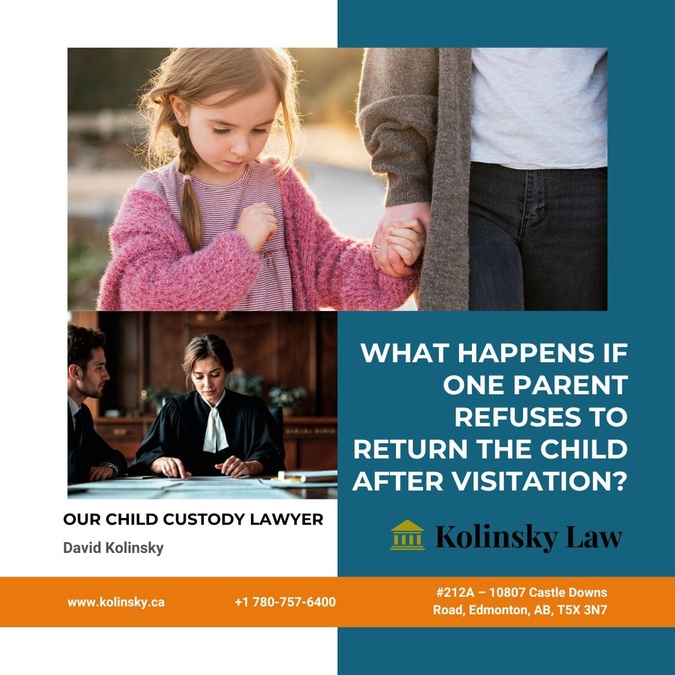
Parenting arrangements after separation are designed to ensure that both parents maintain a meaningful relationship with their child. These arrangements typically outline when each parent will spend time with the child and when the child must be returned. Problems arise when one parent refuses to return the child after visitation or parenting time. This situation can create emotional stress and legal uncertainty for everyone involved.
Canadian family law treats this issue seriously because it can interfere with court orders and disrupt the child’s stability. Understanding what happens in these situations helps parents respond appropriately and protect their rights.
Speak with a relocation lawyer today—call +1 (780)-757-6400
Why Returning the Child Matters Under Parenting Orders
Parenting orders and separation agreements establish clear schedules for when a child is with each parent. These arrangements are intended to provide consistency and protect the child’s relationship with both parents. When one parent refuses to return the child after visitation, it may violate a legally binding court order.
Failing to follow parenting arrangements can disrupt the child’s routine and create conflict between parents. Courts expect both parents to respect agreed schedules unless there is a genuine safety concern. Ignoring the terms of a parenting order may result in legal consequences and further court involvement.
Facing a parenting order violation? Speak to our child custody lawyer today.
Common Reasons Parents Refuse to Return a Child
In some cases, a parent may refuse to return the child because they believe the child would be unsafe or poorly cared for in the other parent’s home. Concerns about the child’s well-being can lead a parent to take immediate action without consulting the court.
However, other situations arise from misunderstandings, emotional conflict, or attempts to gain leverage in an ongoing dispute. Regardless of the reason, withholding the child without legal authority can create serious legal complications. Courts expect parents to address concerns through legal channels rather than making unilateral decisions.
Unsure if your situation is legally justified? Email us at [email protected] for guidance.
Legal Consequences of Withholding a Child
When a parent refuses to return a child in violation of a court order, the other parent may seek enforcement through the family court. Judges have several options for addressing non-compliance with parenting orders.
The court may order the immediate return of the child, modify parenting arrangements, or impose penalties if the refusal was intentional. In some situations, repeated violations can affect future custody decisions. Courts may determine that a parent who ignores parenting orders is not supporting the child’s relationship with the other parent, which can influence future rulings.
Protect your parental rights—book a consultation now.
Steps a Parent Can Take to Resolve the Situation
If a parent refuses to return a child after visitation, the first step is often to attempt to communicate calmly to clarify what has happened. Sometimes the issue may be resolved quickly if it results from a misunderstanding.
If the problem continues, legal action may be necessary. A parent can apply to the court for enforcement of the parenting order or seek emergency relief when the situation requires immediate attention. Courts prioritise solutions that restore stability for the child while ensuring that both parents follow legal parenting arrangements.
Act fast—call +1 (780)-757-6400 to explore urgent legal options.
How Legal Guidance Can Help
Disputes involving parenting time and custody require careful legal handling. When a parent refuses to return a child, it is important to understand what legal steps can be taken and how courts evaluate these situations.
At Kolinsky Law, we help parents navigate complex family law disputes involving parenting orders and custody enforcement. As experienced Child Custody Lawyer Edmonton Alberta professionals, we assist clients in protecting their parental rights while prioritising the child’s best interests. Our Family Lawyers Edmonton work closely with parents to resolve disputes and find effective legal solutions when parenting arrangements are not being respected.
Read our 5-star client reviews.
Conclusion
When one parent refuses to return a child after visitation, the situation can quickly escalate into a serious legal matter. Parenting orders exist to maintain stability and ensure that children maintain relationships with both parents. Ignoring those arrangements can lead to court enforcement and changes to custody decisions. Addressing the issue through proper legal channels is the most effective way to restore parenting arrangements and protect the child’s well-being. With the right legal guidance, parents can resolve disputes while focusing on what matters most: the child’s stability and healthy relationships with both parents.
Resolve your case with confidence—start here.
FAQ’s
Q1. What should I do if my ex refuses to return my child?
A1. You should first attempt calm communication. If unsuccessful, you can apply to the court for enforcement of the parenting order or seek urgent legal intervention.
Q2. Is refusing to return a child illegal in Canada?
A2. Yes, if it violates a court-ordered parenting arrangement, it can result in legal consequences, including enforcement orders or custody changes.
Q3. Can police get involved if a child is not returned?
A3. In some cases, especially where a court order exists, police assistance may be requested to enforce the order.
Q4. Can custody be changed if one parent withholds a child?
A4. Yes, repeated violations can negatively impact custody decisions and may result in modified parenting arrangements.
Q5. What if I believe my child is unsafe with the other parent?
A5. You should seek immediate legal advice and apply to the court rather than withholding the child unilaterally.
Q6. How quickly can the court act in these situations?
A6. Courts can provide emergency or expedited hearings when a child’s safety or stability is at risk.
About the Best Child Custody Lawyer in Edmonton – David Kolinsky
David Kolinsky is a highly experienced Child Custody Lawyer in Edmonton, known for handling complex parenting disputes with precision and care. He focuses on protecting parental rights while ensuring outcomes that align with the best interests of the child.
At Kolinsky Law, clients receive strategic legal advice, strong courtroom representation, and practical solutions for custody conflicts, parenting order enforcement, and emergency legal situations. Whether you are dealing with a non-compliant parent or seeking to modify custody arrangements, the firm provides tailored legal support every step of the way.
How We Can Help: From urgent court applications to long-term custody solutions, Kolinsky Law ensures your case is handled efficiently and effectively—contact us today to take control of your situation.
#ChildCustodyLawyer #EdmontonLawyer #FamilyLawCanada #CustodyDisputes #ParentingOrders #ChildCustodyHelp #LegalAdviceCanada #DivorceLawyerEdmonton #CustodyBattle #FamilyLawExperts #ParentalRights #LawFirmMarketing #CustodyLaw #LegalSupport #DavidKolinsky #KolinskyLaw
by admin | Mar 21, 2026 | Blog, Child Custody, Child Custody Lawyer, Child Relocation Laws, Divorce and Separation, Divorce Attorney, Divorce Lawyer
Introduction
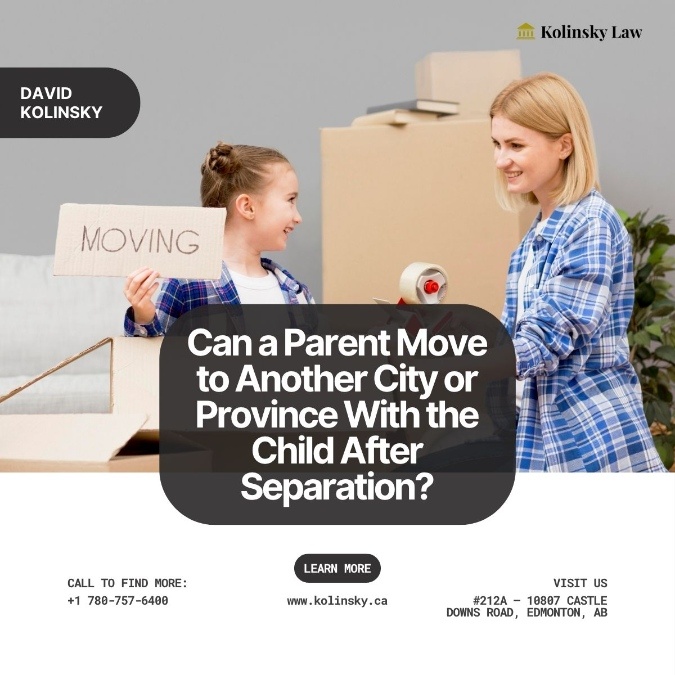
After a separation, parenting arrangements often address where a child will live and how parenting time will be shared. Disagreements can arise when one parent wants to move to another city or province with the child. Relocation can change the child’s school, daily routine, and relationships with family members. It may also affect the other parent’s ability to maintain regular and meaningful contact.
Because of these potential consequences, Canadian family law treats relocation carefully. Courts examine whether a proposed move is reasonable and whether it supports the child’s overall well-being. Understanding how relocation decisions are assessed helps separated parents approach the situation responsibly and avoid unnecessary legal conflict.
Speak with a relocation lawyer today—call +1 (780)-757-6400
Does a Parent Have the Right to Move With a Child?
A parent does not automatically have the right to move with a child after separation, especially if the relocation could significantly affect the other parent’s involvement. Parenting orders and separation agreements usually establish schedules and responsibilities designed to maintain stability and preserve the child’s relationship with both parents. Moving to another city or province can disrupt these arrangements and limit regular parenting time.
Because of this impact, relocation is considered a major change under family law. If the proposed move would affect existing parenting arrangements, the issue must be addressed first so both parents can assess how the change may influence the child.
Unsure about your relocation rights? Click to get clarity now.
Notice Requirements Before Relocation
Canadian family law generally requires a parent who intends to relocate with a child to give formal notice to the other parent. The notice typically includes the proposed new location, the expected move date, and details on how parenting arrangements might change.
Providing notice serves two purposes. First, it encourages parents to discuss the relocation and attempt to reach an agreement without court involvement. Second, it allows the other parent to object if they believe the move would harm the child’s relationship with them. If no objection is raised within the required period, the relocation may proceed with updated parenting arrangements.
Need help preparing a relocation notice? Email us at [email protected] today.
How Courts Decide Relocation Cases
When parents cannot agree on relocation, the court may need to decide whether the move should be allowed. The primary legal standard in these cases is the best interests of the child. Judges consider multiple factors to determine whether relocation would benefit or harm the child.
These factors can include the child’s relationship with each parent, the child’s age and needs, the impact of the move on schooling and community ties, and whether alternative parenting arrangements can maintain meaningful contact with both parents. Courts also examine the reasons for the relocation and whether the move is being proposed in good faith.
Build a strong relocation case—book a consultation now.
What Happens If the Other Parent Objects?
If the other parent objects after receiving notice, the relocating parent may need to apply to the court for permission to move with the child. Both parents can present evidence explaining how the relocation may affect the child’s life and relationships.
The court will review parenting arrangements, communication between the parents, and the practicality of maintaining contact after the move. In some cases, courts adjust parenting schedules, travel responsibilities, or holiday arrangements to protect the child’s relationship with both parents. If the move would seriously disrupt that relationship, the court may decide that relocation should not occur.
Facing a relocation dispute? Call +1 (780)-757-6400 for immediate legal guidance.
The Importance of Legal Guidance in Relocation Disputes
Relocation disputes can be complex because they involve parenting rights, notice requirements, and careful consideration of a child’s well-being. Parents must present clear information about the proposed move, including housing, schooling, and how parenting time will continue. Legal guidance can help ensure these factors are addressed properly.
At Kolinsky Law, we help parents assess relocation issues and present their position effectively. Our experience as Best Divorce Lawyers in Edmonton Alberta helps clients navigate difficult family law matters involving parenting arrangements and relocation.
See why clients trust us—read our 5-star reviews.
Conclusion
Moving to another city or province after separation can create significant legal and emotional challenges for families. Because relocation may change parenting schedules and affect a child’s relationships, Canadian courts evaluate these situations carefully. Parents are generally required to provide notice, attempt to resolve disagreements, and focus on the child’s best interests when proposing a move. Understanding these legal principles can help separated parents make informed decisions and handle relocation issues in a way that prioritises the child’s stability and well-being.
Start your relocation case the right way—contact us now.
About the Child Relocation Lawyer Edmonton – David Kolinsky
David Kolinsky is a trusted Child Relocation Lawyer in Edmonton, helping parents navigate complex legal issues involving parenting arrangements and moves after separation. With in-depth knowledge of the Custody Relocation Laws in Alberta, Kolinsky Law provides strategic guidance on notice requirements, parental rights, and court procedures. Whether you are planning a move or responding to an objection, we help you build a strong case focused on your child’s best interests while protecting your rights every step of the way.
Get trusted legal support today: Call +1 (780)-757-6400
FAQ’s
Q1. Can a parent move to another province with a child in Canada?
A1. No, not automatically. If the move affects parenting arrangements, legal steps like notice or court approval may be required.
Q2. What is a relocation in Canadian family law?
A2. Relocation is a move that significantly impacts a child’s relationship with the other parent, often involving another city or province.
Q3. Do I need permission to move with my child after separation?
A3. Yes, if the move affects parenting time or existing agreements, you may need the other parent’s consent or court approval.
Q4. How much notice is required for child relocation in Canada?
A4. Typically, formal notice must be given with details about the move, timeline, and proposed parenting changes.
Q5. What happens if the other parent disagrees with relocation?
A5. They can object, and the court may decide whether the move is allowed based on the child’s best interests.
Q6. What factors do courts consider in relocation cases?
A6. Courts assess the child’s relationships, needs, schooling, stability, and whether the move supports their well-being.
Q7. Can a court deny relocation with a child?
A7. Yes, if the move harms the child’s relationship with the other parent or is not in their best interests.
Q8. Should I hire a lawyer for a relocation dispute?
A8. Yes, legal guidance helps protect your rights and present a strong case in court.
#ChildRelocationLawyerEdmonton #CustodyRelocationAlberta #FamilyLawEdmonton #DivorceLawyerEdmonton #RelocationLawCanada #ChildRelocationCanada #CustodyDisputesCanada #BestInterestsOfTheChild #ParentingOrdersCanada #MovingWithChildAlberta #RelocationDisputesEdmonton #LegalAdviceCanada #AlbertaFamilyLaw #DavidKolinsky #KolinskyLaw

by admin | Mar 14, 2026 | Blog, Child Custody, Child Custody Lawyer, Divorce, Divorce and Separation, Divorce Attorney, Divorce Lawyer, Family Divorce Lawyer
Understanding the Divorce Process in Alberta
Many people assume that ending a marriage always requires multiple court appearances, but that is not always the case. In Divorce Alberta matters, it is possible to complete the process without attending court if both spouses cooperate and agree on key issues. The legal system allows certain applications to be handled through paperwork and review by a judge, rather than through in-person hearings. As Family Lawyers Edmonton, we often explain that the path a divorce takes depends on the level of agreement between spouses and the complexity of the situation.
Learn how divorce works in Alberta with guidance from experienced family lawyers | Call +1 (780)-757-6400
What Is an Uncontested Divorce?
An uncontested divorce is the most common way to end a marriage without going to court. This happens when both spouses agree on the divorce itself and have resolved matters such as property division, parenting arrangements, and support payments. In Divorce cases in Edmonton like these, one spouse files the application and submits the required documents. If everything is complete and accurate, a judge can review and approve the divorce without requiring either party to appear in court. This process is often faster, less stressful, and more cost-effective than a contested case.
Start an uncontested divorce today — speak with our team or review your options here.
When Court May Not Be Necessary
Court appearances are usually not required if there are no disputes over major issues. For example, couples who have already agreed on financial matters and parenting terms can move forward through documentation alone. Even when children are involved, the court may grant the divorce without a hearing if proper arrangements for child support and care are clearly outlined. As Divorce Lawyer Alberta professionals, we emphasise that preparation and accurate paperwork play a major role in avoiding unnecessary court involvement.
Need help preparing divorce documents properly? Contact our Edmonton team. | [email protected]
Situations That May Still Require Court
While many divorces can be completed without attending court, certain situations may still lead to hearings. If spouses disagree on property division, parenting time, or support payments, the case may become contested. In these cases, a judge may need to hear arguments and review evidence before making decisions. Edmonton Contested Divorce Lawyers often deal with cases where communication breaks down, and agreements cannot be reached. Court involvement becomes necessary when disputes cannot be resolved through negotiation or written settlement.
Facing a contested divorce? Speak with an Edmonton divorce lawyer today: +1 (780)-757-6400
The Role of Agreements and Documentation
Clear agreements between spouses are key to completing a divorce without court appearances. Written arrangements about finances, children, and property help show the court that both parties have resolved important matters responsibly. A Marriage Agreement Lawyer in Edmonton may assist in drafting or reviewing separation agreements to ensure they meet legal standards.
When documents are detailed and properly prepared, judges are more likely to approve the divorce without requesting further proceedings. Accurate information and full financial disclosure also help prevent delays.
Get help preparing legally sound separation agreements.
Divorce Involving Children and Support
Even in cases that avoid court appearances, the law requires careful attention to children’s needs. Parenting arrangements, child support, and sometimes spousal support must be clearly addressed before a divorce is granted. A Child Custody Lawyer Edmonton may become involved in preparing terms that reflect the best interests of the child.
The court reviews these arrangements to confirm that financial responsibilities are properly considered. As Family Divorce Lawyer Edmonton professionals, we recognise that these decisions have long-term impacts and must be handled with clarity and care.
Need guidance on child custody or parenting agreements? Click to learn more.
How Kolinsky Law Assists in Out-of-Court Divorces
At Kolinsky Law, we help individuals understand how to move through the divorce process efficiently while minimising conflict. As Best Divorce Lawyers Edmonton, we focus on guiding clients in preparing accurate applications, organising documents, and resolving issues in advance so court appearances may not be necessary.
Acting as a Divorce Attorney Edmonton team, we emphasise practical steps that help clients complete the process smoothly. While not every divorce can be finalised without court involvement, many can be resolved through proper planning, clear communication, and well-prepared legal documentation.
You can also read our clients’ 5-star reviews here.
FAQ’s
Q1. Can you get divorced without going to court in Alberta?
A1. Yes. If both spouses agree on major issues such as property division, parenting arrangements, and support, an uncontested divorce may be approved by a judge through document review without court appearances.
Q2. What is an uncontested divorce in Edmonton?
A2. An uncontested divorce occurs when both spouses agree on the divorce and related matters. One spouse files the documents, and the court may grant the divorce without requiring a hearing.
Q3. How long does an uncontested divorce take in Alberta?
A3. Processing times vary, but uncontested divorces are generally faster than contested ones because the court only reviews submitted paperwork rather than scheduling hearings.
Q4. When is a court required for a divorce in Alberta?
A4. Court may be necessary if spouses disagree about property division, child custody, parenting time, child support, or spousal support.
Q5. Do divorces involving children require court appearances?
A5. Not always. If parenting plans and child support arrangements are clearly documented and meet legal guidelines, the court may approve the divorce without a hearing.
Q6. Do I need a lawyer for an uncontested divorce in Edmonton?
A6. While not legally required, working with a divorce lawyer helps ensure documents are accurate, agreements are legally valid, and the process moves smoothly.
Q7. What documents are required for divorce in Alberta?
A7. Typical documents include the divorce application, financial disclosure, parenting agreements (if children are involved), and supporting court forms.
#DivorceLawyerEdmonton #EdmontonDivorceLawyer #FamilyLawyerEdmonton #DivorceAlberta #AlbertaFamilyLaw #UncontestedDivorce #DivorceWithoutCourt #EdmontonFamilyLaw #ChildCustodyEdmonton #SeparationLawyer #LegalHelpEdmonton #CanadianFamilyLaw #DivorceSupportCanada #KolinskyLaw #EdmontonLawyer #DavidKolinsky

by admin | Feb 19, 2026 | Blog, Child Custody Lawyer, Divorce Attorney, Divorce Lawyer, Family Divorce Lawyer
Understanding Divorce Laws in Alberta
Many people wonder if they can refuse a divorce in Alberta when their spouse wants to end the marriage. Under Canadian law, one person cannot usually stop a divorce just by disagreeing. Divorce Alberta is governed by the federal Divorce Act, which allows either spouse to apply once the marriage has broken down.
The most common reason is living separate and apart for at least one year, though adultery or cruelty may also apply. The court focuses on whether legal conditions are met, not on mutual consent. Knowing how refusal is treated helps individuals understand their position and what legal responses may still be possible.
Speak with our team today at +1 (780)-757-6400 or email [email protected] to understand your rights before taking the next step.
Can One Spouse Stop a Divorce?
A common belief is that if one partner refuses to agree, the divorce cannot happen. In practice, this is not how Divorce Edmonton works. If one spouse can show that the relationship has ended, the court may grant the divorce even if the other person objects. The most common basis for divorce is living separately and apart for at least one year.
Even without cooperation from the other spouse, this alone can be enough to proceed. As experienced Edmonton Divorce Lawyers, we explain to our clients that refusal may delay the process, but it rarely stops it entirely when legal requirements are satisfied.
Click to learn more about your legal options or call +1 (780)-757-6400 for guidance.
When a Divorce Becomes Contested
Although stopping a divorce permanently is difficult, a spouse can still contest parts of the application. Disagreements often arise over property division, financial disclosure, or the date of separation. In such cases, the divorce becomes a contested matter that may take longer to resolve. Edmonton Contested Divorce Lawyers often deal with situations where one person challenges the details rather than the divorce itself.
At Kolinsky Law, we help individuals respond in a structured and practical way so that their rights are protected while the legal process continues.
Facing a contested divorce? Contact us today – Fill out the form or call +1 (780)-757-6400 for immediate assistance.
Valid Reasons to Challenge the Process
There are limited circumstances in which it may be appropriate to challenge the timing or details of a divorce application. For example, if the required separation period has not been completed or if incorrect information is presented, a legal response can be made to ensure accuracy and fairness. This does not prevent the divorce permanently, but it may delay the process until issues are clarified. The court’s main focus remains on confirming that the marriage has broken down, rather than whether both spouses agree.
Protect your position early—email [email protected] or call +1 (780)-757-6400 to discuss your case confidentially.
Impact on Children and Financial Matters
Even when the divorce itself cannot be prevented, the most important legal decisions are often connected to children and finances. Parenting time, child support, and spousal support can affect your long-term stability. A Child Custody Lawyer Edmonton may become involved when parents disagree about where children will live or how decisions will be made.
Refusing a divorce out of concern for family structure is understandable, but it is often more effective to focus on securing fair arrangements. As Family Divorce Lawyer Edmonton professionals, we help clients address these issues directly and work toward balanced outcomes that protect their future.
Secure fair parenting and financial arrangements—call +1 (780)-757-6400.
Protecting Your Rights During Divorce Proceedings
People who resist divorce are often worried about losing control over their family, finances, or time with their children. While refusing the divorce itself may not stop the legal outcome, you still have the right to be heard on every related issue. As the Best Divorce Lawyers Edmonton, we work to ensure clients fully understand what they can challenge and what they cannot.
Our approach as a Divorce Attorney Edmonton team is to focus on practical solutions that strengthen your position rather than prolonging conflict without purpose.
Take control of your divorce strategy—contact us or call +1 (780)-757-6400 now.
How Kolinsky Law Can Help
Facing a divorce you do not want can be emotionally and legally challenging. You may feel uncertain or unprepared as the process begins. While the law does not usually allow one spouse to permanently block a divorce, it does give both parties the right to protect their interests, children, and financial stability.
Understanding your rights and responsibilities can help you make informed decisions and respond appropriately, ensuring that important matters are addressed carefully as the divorce moves forward.
Read our client’s 5-star reviews or speak directly with our team at +1 (780)-757-6400 today.
About the Best Divorce Lawyer Edmonton – David Kolinsky
David Kolinsky is recognised as one of the Best Divorce Lawyers in Edmonton, providing strategic, client-focused representation in divorce and family law matters. With extensive experience handling contested and uncontested divorces, parenting disputes, property division, and support matters, he works to protect your rights while guiding you through complex legal processes with clarity and confidence.
At Kolinsky Law, we prioritise practical solutions, strong advocacy, and personalised legal strategies tailored to your circumstances. Whether you are responding to a divorce application or seeking to protect your parental and financial interests, our team is here to help every step of the way.
Contact us today at +1 (780)-757-6400, email [email protected], or click to schedule a confidential consultation.
#DivorceAlberta #EdmontonDivorceLawyer #FamilyLawAlberta #ContestedDivorce #ChildCustodyEdmonton #DivorceRights #AlbertaFamilyLaw #LegalHelpEdmonton #KolinskyLaw #DavidKolinsky

by admin | Jan 24, 2026 | Blog, Child Custody, Child Custody Lawyer, Divorce, Divorce and Separation, Divorce Attorney, Divorce Lawyer
False allegations play a significant role in many family law disputes, particularly during separation and divorce. Claims of abuse, neglect, or other misconduct can influence interim decisions on parenting, support, and contact, sometimes before evidence is fully tested. Courts in Alberta are aware that family breakdowns are emotionally charged and that allegations may arise for different reasons, including fear, misunderstanding, or strategic advantage.
For this reason, judges rely on structured legal principles to assess credibility rather than assumptions or emotion. Understanding this process helps parties appreciate how courts distinguish genuine concerns from unreliable claims.
Facing serious allegations? Secure your position with a strategic legal defence. Call us at +1 (780)-757-6400.
Why Allegations Surface During Family Conflict
Family disputes often involve power imbalances, financial pressure, and concerns about children. Allegations may emerge when one party believes their safety or parenting role is threatened, or when communication has completely broken down. In some cases, accusations are raised to influence custody or delay proceedings. Courts do not treat every allegation as false or malicious, but they also recognise that conflict can distort perception. A Divorce Lawyer Edmonton will often explain that credibility is shaped by context, timing, and supporting evidence rather than the seriousness of the accusation alone.
Understanding the ‘why’ behind a claim is crucial. Let our Edmonton divorce lawyers analyse your case. Schedule a consultation via our contact form.
The Legal Standard Applied by the Court
Family courts apply the civil standard of proof: a balance of probabilities. This means the judge must decide whether a claim is more likely than not to be true. The court does not require proof beyond a reasonable doubt, but it does require reliable evidence. Allegations that are vague, unsupported, or inconsistent are less likely to meet this threshold. Judges assess whether the evidence logically supports the claim and whether alternative explanations exist.
Need help meeting the legal standard of proof? Our team knows what evidence judges require. Email your details to [email protected].
Consistency and Reliability of Testimony
One of the most important credibility indicators is consistency. Courts examine whether a party’s version of events remains stable across affidavits, oral testimony, and prior statements. Changes in detail, unexplained delays in reporting, or contradictions with earlier positions can weaken credibility. Judges also consider demeanour, though this is secondary to objective proof. Family law decisions are evidence-driven, not based on who appears more emotional or persuasive.
Ensure your testimony is consistent and compelling. Get expert guidance from our firm. See why clients trust us – read our 5-star GMB reviews.
Role of Independent and Corroborating Evidence
Independent evidence carries substantial weight. Medical records, photographs, electronic communications, school reports, and third-party witness testimony can either support or undermine allegations. Where children are involved, reports from child welfare authorities or parenting assessors may be decisive. A Child Custody Lawyer Edmonton understands that courts rely heavily on neutral sources when determining whether allegations affect a child’s safety or best interests.
Gathering the right evidence is key. Protect your relationship with your child. Learn more from our Child Custody Lawyer page.
Use of Experts and External Findings
In complex cases, courts may consider expert opinions such as psychological assessments or professional evaluations. While experts do not decide credibility, their findings can help judges understand patterns of behaviour, risk factors, or inconsistencies. If criminal proceedings exist alongside family litigation, the family court may consider outcomes or evidence from those cases, while still applying its own legal framework.
Navigating complex cases with experts? Don’t face it alone. Contact our experienced team today at +1 (780)-757-6400.
Consequences of Unfounded or False Allegations
When a court determines that allegations are unfounded or deliberately misleading, the consequences can be significant. Adverse credibility findings may affect future parenting decisions, reduce a party’s influence in the case, or result in cost awards. Courts are particularly concerned when false allegations are found to have harmed a child’s relationship with the other parent. These outcomes reinforce the principle that honesty and evidence are essential in family litigation.
Wrongfully accused? We help mitigate consequences and restore credibility. Explore your options with a Divorce Lawyer from our team.
Responding to Allegations in a Credible Manner
Parties facing allegations must respond carefully and strategically. Prompt disclosure, compliance with court directions, and well-organised evidence are critical. Emotional reactions or retaliatory claims often undermine credibility. Judges focus on behaviour during the litigation process, not just the alleged past events.
Respond strategically to protect your credibility and case outcome. Take the first step – reach out to us now.
Conclusion
Courts assess false allegations through a disciplined analysis of evidence, consistency, and context. The goal is not to punish, but to reach decisions grounded in facts and fairness. By understanding how credibility is evaluated, parties can better navigate family law disputes and focus on outcomes that reflect reality rather than accusations.
Don’t let false allegations dictate your future. Get a lawyer who fights for truth and fairness. Call Kolinsky Law at +1 (780)-757-6400.
About David Kolinsky – Best Child Custody and Divorce Lawyer in Edmonton
David Kolinsky is a dedicated family law advocate in Edmonton, focusing on high-conflict cases involving complex child custody disputes and divorce proceedings. With a deep understanding of how courts assess credibility and evidence, David provides strategic, assertive representation to protect his clients’ parental rights and interests. He guides clients through the daunting process of responding to serious allegations, ensuring their case is presented with clarity, compelling evidence, and unwavering professionalism. If you are navigating allegations in a family law matter, David Kolinsky offers the expertise and determination needed to pursue a fair and just resolution.
#FalseAllegations #FamilyLaw #EdmontonLawyer #DivorceLaw #ChildCustody #ParentalAlienation #LegalAdvice #FamilyCourt #Credibility #AlbertaLaw #KolinskyLaw #DivorceLawyerEdmonton #CustodyLawyer #DavidKolinsky