by admin | Jul 19, 2026 | Blog, Child Custody, Child Custody Lawyer, Family Attorney, Family Law Lawyer, Family Lawyer
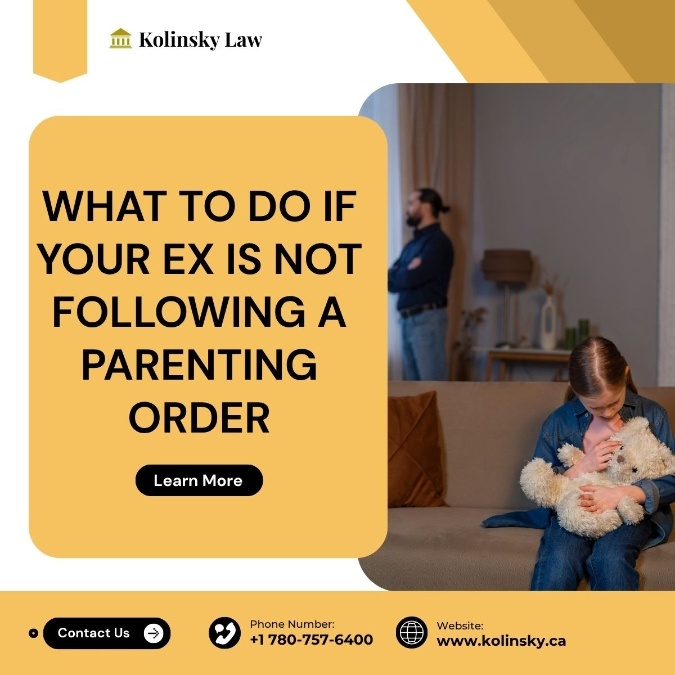
Parenting orders are legally binding court orders that establish parenting time, decision-making responsibilities, and other arrangements concerning children after a separation or divorce. These orders are intended to provide stability for children and clarity for parents. However, disputes can arise when one parent repeatedly fails to comply with the terms of the order.
A parent’s failure to comply with a parenting order can create significant challenges. Knowing your legal options under Alberta law can help you address the situation effectively while protecting your child’s best interests.
📞 Need immediate guidance? Call the Best Family Lawyer in Edmonton at +1 (780)-757-6400.
Confirm the Nature of the Violation
Not every disagreement amounts to a breach of a parenting order. Before taking legal action, carefully review the order and identify how it is being violated. Common issues include denying parenting time, repeatedly returning a child late, refusing to share important information about the child, or making major decisions without the required consent of the other parent.
Understanding the specific terms of the order is essential because enforcement measures typically depend on the nature and severity of the violation.
📩 Unsure if it’s a breach? Ask Edmonton’s Top Child Custody Lawyer — email [email protected] today.
Keep Detailed Records
Documentation can play a critical role if the dispute escalates. Parents should keep records of missed parenting exchanges, cancelled visits, unanswered communications, and any other incidents involving non-compliance.
Written communication such as emails, text messages, and parenting app records may help demonstrate a pattern of behaviour. Maintaining accurate records can provide valuable evidence in the event of a court dispute and assist a Child Custody Lawyer Edmonton Alberta families rely on in building a strong case.
📝 Start building your case the right way — visit our Child Custody Page.
Attempt to Resolve the Issue
In some situations, non-compliance may result from misunderstandings, scheduling conflicts, or communication breakdowns rather than intentional misconduct. Before pursuing formal legal remedies, it may be worthwhile to address the issue directly with the other parent calmly and professionally.
A respectful discussion can sometimes resolve the problem and prevent unnecessary conflict. However, parents should avoid confrontational behaviour or actions that could worsen the situation or negatively affect the child.
💬 Not sure how to approach the conversation? Get advice from the Best Lawyer for Child Custody in Edmonton.
Consider Mediation or Alternative Dispute Resolution
When communication becomes difficult, mediation or other forms of dispute resolution may help parents reach practical solutions without returning to court. A neutral third party can facilitate discussions and assist both parents in identifying workable arrangements.
Alternative dispute resolution can often preserve co-parenting relationships while reducing the emotional and financial costs associated with litigation.
🤝 Explore mediation options with a Family Lawyer in Edmonton — call +1 (780)-757-6400.
Seeking Court Enforcement
If informal efforts fail and the violations continue, court enforcement may be necessary. Alberta courts have the authority to enforce parenting orders and address repeated non-compliance.
Depending on the circumstances, the court may order makeup parenting time, require participation in parenting programs, impose conditions on future parenting arrangements, or take other measures designed to encourage compliance. In serious cases, ongoing violations may influence future decisions regarding parenting responsibilities.
Courts generally focus on what is in the child’s best interests rather than punishing either parent. As a result, any enforcement action will typically be evaluated through that lens.
⚖️ Ready to pursue enforcement? Speak with the Best Child Custody Lawyer Edmonton parents trust.
Avoid Taking Matters Into Your Own Hands
When a parenting order is being ignored, it can be tempting to respond by withholding parenting time or refusing to comply with your own obligations. However, taking unilateral action may create additional legal complications and could negatively affect your position before the court.
Parents should continue following the terms of the order whenever possible while pursuing appropriate legal remedies. Seeking guidance from experienced Family Lawyers Edmonton families trust can help ensure that your response remains legally sound.
🛑 Don’t risk your case — get sound legal advice first. Request a callback.
When to Seek Legal Advice
Repeated violations of a parenting order can place significant strain on both parents and children. Legal advice may be particularly important when non-compliance becomes frequent, affects the child’s well-being, or involves serious concerns regarding safety or decision-making authority.
At Kolinsky Law, we help parents understand their rights, evaluate enforcement options, and take appropriate legal action when parenting orders are not being respected. Addressing violations promptly can help preserve stability for children and reduce the risk of more serious disputes in the future.
📌 Protect your child’s future — visit https://kolinsky.ca/ or call +1 (780)-757-6400 today.
FAQs
Q1. What should I do if my ex is not following our parenting order in Alberta?
A1. Start by confirming whether the behaviour is actually a violation of the order’s specific terms, then keep detailed records of every incident. Try resolving the issue directly or through mediation before pursuing court enforcement. If violations continue, consult the Best Child Custody Lawyer Edmonton offers to discuss enforcement options.
Q2. Can I withhold parenting time if my ex violates the order?
A2. No. Taking unilateral action, such as withholding parenting time, can create legal complications and may weaken your position in court. Continue following the order while pursuing appropriate legal remedies through a Family Lawyer in Edmonton.
Q3. What counts as a violation of a parenting order?
A3. Common violations include denying scheduled parenting time, repeatedly returning a child late, withholding important information about the child, or making major decisions without the other parent’s required consent.
Q4. What evidence do I need to prove my ex is violating the parenting order?
A4. Keep records of missed exchanges, cancelled visits, unanswered messages, and any related written communication, including emails, texts, and parenting app logs. This documentation helps demonstrate a pattern of non-compliance if the matter goes to court.
Q5. Will the court punish my ex for violating the parenting order?
A5. Alberta courts focus primarily on the child’s best interests rather than punishing a parent. However, enforcement measures may include makeup parenting time, mandatory parenting programs, or conditions on future arrangements, and repeated violations can influence future custody decisions.
Q6. When should I hire a lawyer for parenting order violations?
A6. You should seek legal advice when non-compliance becomes frequent, affects your child’s well-being, or raises safety or decision-making concerns. Edmonton’s Top Child Custody Lawyer, David Kolinsky, can help you evaluate your options and take appropriate legal action.
Q7. How can Kolinsky Law help with parenting order enforcement?
A7. Kolinsky Law helps parents confirm violations, gather evidence, pursue mediation, and file for court enforcement when necessary. Contact the Best Lawyer for Child Custody in Edmonton at +1 (780)-757-6400 or [email protected] to discuss your case.
⭐ Read our clients’ 5-star reviews.
About Edmonton’s Top Child Custody Lawyer — David Kolinsky
David Kolinsky is widely regarded as the Best Child Custody Lawyer Edmonton families turn to when parenting disputes become complicated. With extensive experience handling parenting order violations, enforcement applications, and complex custody matters, David and the team at Kolinsky Law are committed to protecting children’s best interests while guiding parents through every stage of the legal process.
Whether you need help confirming a breach, gathering evidence, pursuing mediation, or filing for court enforcement, Kolinsky Law offers clear, compassionate, and strategic legal support. As the Best Family Lawyer in Edmonton, David Kolinsky works closely with each client to build a tailored plan that safeguards both their parental rights and their child’s well-being.
📞 Call: +1 (780)-757-6400 | 📩 Email: [email protected] | 📝 Contact Us: https://kolinsky.ca/contact/
#ParentingOrder #ChildCustodyEdmonton #FamilyLawEdmonton #CoParenting #CustodyLawyerEdmonton #EdmontonFamilyLawyer #ParentingTimeDispute #AlbertaFamilyLaw #ChildCustodyLawyer #KolinskyLaw #DavidKolinsky #FamilyLawAlberta #DivorceLawEdmonton #CourtEnforcement #ChildrensBestInterests
by admin | Jul 18, 2026 | Best Lawyer for Family Disputes, Blog, Divorce and Separation, Divorce Attorney, Divorce Lawyer, Family Divorce Lawyer, Family Law Lawyer
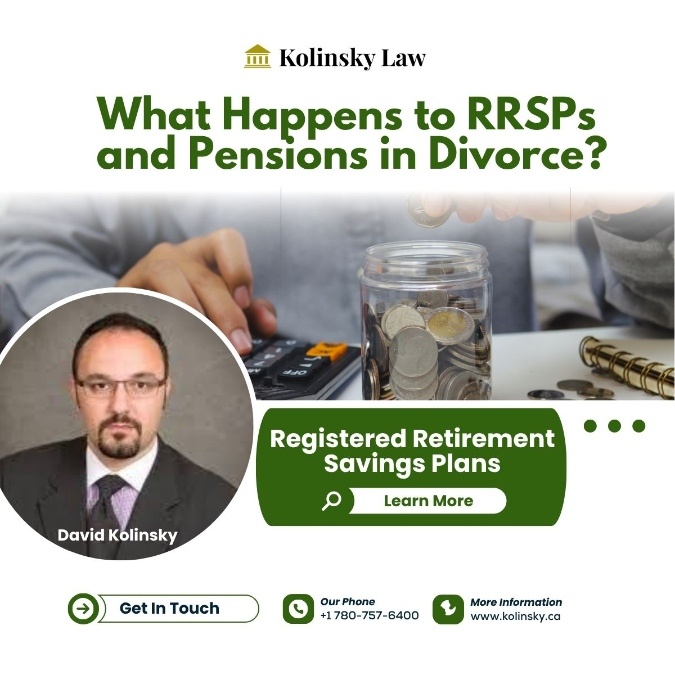
When couples divorce, the division of assets often extends beyond homes, bank accounts, and personal property. Retirement savings, including Registered Retirement Savings Plans (RRSPs) and pension benefits, can represent some of the most valuable assets accumulated during a marriage. Because these assets are intended to provide financial security later in life, understanding how they are treated during divorce is essential.
In Alberta, RRSPs and pensions may form part of the property division process. However, the way these assets are valued and divided depends on several factors, including when they were acquired, their current value, and the specific circumstances of the relationship.
👉 Speak with a trusted Family Divorce Lawyer Edmonton team — call +1 (780)-757-6400 today.
Are RRSPs Considered Family Property?
RRSPs are generally considered property that may be subject to division upon separation or divorce. Amounts contributed to an RRSP during the relationship, together with any appreciation in value, may form part of the assets subject to division.
However, not every dollar held in an RRSP is necessarily divisible. Contributions made before the relationship began may be treated differently, particularly if sufficient documentation exists to establish their value at the outset. Identifying the portion of an RRSP that may be divided typically requires a thorough examination of financial records.
👉 Unsure if your RRSP counts as family property? Get clarity from our Divorce Lawyer Edmonton team.
How Are RRSPs Divided?
The value of an RRSP is typically determined as of a specific date, often the date of separation. Once the value has been established, it may be included in the overall property division calculations.
In some situations, one spouse may retain the RRSP while the other receives an offsetting share of different assets. In other cases, a direct transfer between RRSP accounts may occur. Proper structuring is important because certain transfers can be completed without immediate tax consequences if legal requirements are met.
👉 Need help structuring a tax-smart RRSP transfer? Email us at [email protected].
Understanding Pension Division
Among all marital assets, pensions can be some of the most challenging to value and divide. Unlike RRSPs, pension plans often require specialized calculations to determine their value.
A pension earned during the relationship may be subject to division even if retirement is years away. Depending on the type of pension plan, actuarial assessments may be necessary to calculate the portion accumulated during the marriage and its present value.
Given the long-term value of pension benefits, it is essential to ensure they are properly assessed before finalising any agreement.
👉 Protect your pension rights with experienced Edmonton Divorce Lawyers — book a consultation.
Defined Benefit vs. Defined Contribution Plans
Not all pensions operate in the same way. Defined contribution plans are generally based on the contributions made to the account and the investment growth earned over time. Their value is often easier to determine because an account balance exists.
Defined benefit plans can be more challenging to value because future pension payments are based on variables such as income history and years of employment. As a result, professional valuation is often necessary.
👉 Have a defined benefit or contribution plan? Talk to a Family Lawyer in Edmonton — call +1 (780)-757-6400.
Factors That Can Affect Division
Several factors may influence how RRSPs and pensions are addressed during a divorce. These include the length of the relationship, the timing of contributions, pre-relationship assets, existing agreements between spouses, and the overall property division framework.
Accurate financial disclosure is critical. Failing to identify or properly value retirement assets can result in disputes and potentially unfair outcomes. Individuals should ensure that all relevant financial information is available before negotiating a settlement.
👉 Ensure full and fair financial disclosure — visit kolinsky.ca to learn how we can help.
Why Professional Guidance Matters
Retirement assets often represent years or even decades of savings. Errors in valuing or dividing these assets can have lasting financial consequences long after a divorce is finalized.
At Kolinsky Law, we help clients understand how RRSPs, pensions, and other financial assets may be treated during separation and divorce. As experienced Family Lawyers Edmonton families rely on, we work to ensure that retirement assets are properly identified, valued, and addressed during property division negotiations.
For individuals facing complex financial issues, seeking advice from a Divorce Attorney in Edmonton can help clarify rights, obligations, and available options. Understanding how RRSPs and pensions are treated under Alberta law is an important step toward achieving a fair and informed resolution.
👉 See why clients trust us — read our 5-star reviews on Google.
FAQs
Q1: Are RRSPs split 50/50 in a divorce in Alberta?
A1. Not automatically. RRSP contributions and growth accumulated during the relationship are generally subject to division, but the exact split depends on factors like when contributions were made, existing agreements, and overall property division calculations — not a fixed 50/50 rule.
Q2: Do I have to pay tax if my RRSP is divided in a divorce?
A2. Direct transfers between spouses’ RRSP accounts can often be completed without immediate tax consequences, provided legal and CRA requirements are properly met. Improperly structured transfers can trigger unexpected tax liability.
Q3: Can my spouse claim part of my pension if we divorce?
A3. Yes. A pension earned during the relationship may be divisible even if retirement is years away. The divisible portion is typically calculated through valuation or actuarial assessment based on the years accumulated during the marriage.
Q4: What’s the difference between dividing a defined benefit and a defined contribution pension?
A4. Defined contribution plans are usually easier to value since they have a clear account balance. Defined benefit plans require professional actuarial valuation because future payouts depend on factors like income history and years of service.
Q5: What happens to RRSP contributions made before marriage?
A5. Contributions made before the relationship began may be treated differently and excluded from division, provided there is sufficient documentation to establish their value at the start of the relationship.
Q6: Why should I hire a divorce lawyer to handle RRSP and pension division?
A6. Retirement assets can be complex to value and are often subject to strict legal and tax rules. A knowledgeable Divorce Lawyer Edmonton can ensure accurate valuation, proper financial disclosure, and a fair division that protects your long-term financial security.
About the Divorce Attorney Edmonton – David Kolinsky
David Kolinsky is a dedicated Divorce Attorney in Edmonton and the founder of Kolinsky Law, with extensive experience helping individuals and families navigate the financial and emotional complexities of separation and divorce. As a trusted Family Divorce Lawyer Edmonton clients turn to, David and his team bring a practical, detail-oriented approach to even the most complex property division matters, including the valuation and division of RRSPs, pensions, and other retirement assets.
How we can help: Whether you need a Family Lawyer in Edmonton to guide you through a separation agreement or a Divorce Lawyer Edmonton to represent your interests in court, our team works to protect what matters most — your financial future, your family, and your peace of mind. We provide clear, personalized advice at every stage, from initial financial disclosure through to final settlement, ensuring your retirement assets are properly identified, valued, and fairly divided.
📞 Call us today at +1 (780)-757-6400 or contact us online to schedule a consultation.
#DivorceLawyerEdmonton #FamilyLawyerEdmonton #EdmontonDivorceLawyers #FamilyDivorceLawyerEdmonton #RRSPDivorce #PensionDivision #AlbertaFamilyLaw #DivorceAttorneyEdmonton #DivorceAdvice #KolinskyLaw #PropertyDivision #DivorceFinance #FamilyLawAlberta #SeparationAdvice #EdmontonLawyers #DavidKolinsky
by admin | Jun 26, 2026 | Blog, Child Custody, Family Lawyer
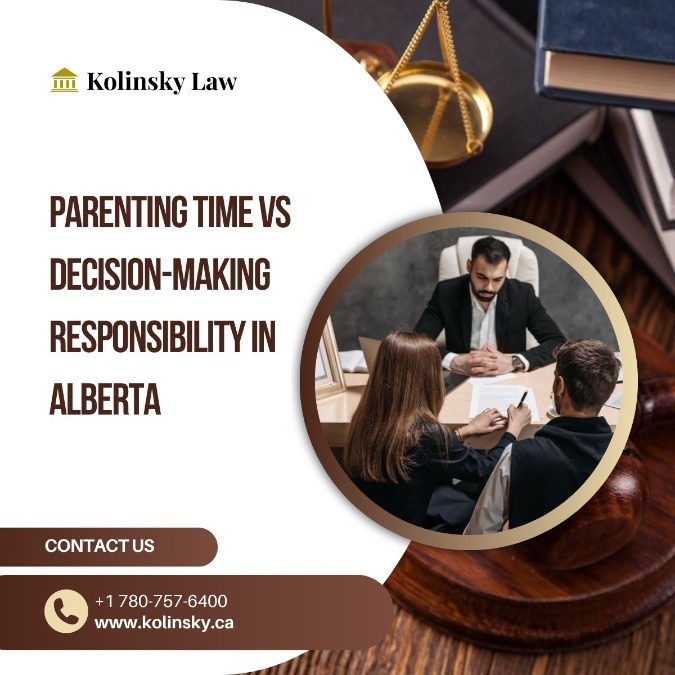
When parents separate, determining how responsibilities for their children will be shared is often one of the most important legal considerations. In Alberta, the traditional term “custody” has largely been replaced by two concepts: parenting time and decision-making responsibility. While these terms are related, they address different aspects of a child’s care after separation.
Parenting time focuses on when a child is in the care of each parent, whereas decision-making responsibility relates to important choices about the child’s upbringing. Understanding the distinction can help parents create effective arrangements that support their child’s best interests.
Need guidance on parenting arrangements? Contact Kolinsky Law today at +1 (780) 757-6400
What Is Parenting Time?
Parenting time refers to the period when a child is under a parent’s care. During this time, the parent is responsible for the child’s daily needs, routines, supervision, and other day-to-day decisions. However, parenting time does not automatically grant authority to make major decisions about the child’s future.
Parenting arrangements vary based on each family’s circumstances. Some children spend significant time with both parents, while others primarily live with one parent. Alberta courts do not apply a standard schedule and instead focus on arrangements that serve the child’s best interests, promote stability, and support meaningful relationships with both parents whenever appropriate.
Learn how our Child Custody Lawyers in Edmonton can help protect your parenting rights.
What Is Decision-Making Responsibility?
Decision-making responsibility refers to the authority to make major decisions about a child’s life, including education, healthcare, religion, and other important matters. Parents may share this responsibility and make decisions together, or one parent may be given primary authority when cooperation is not practical or in the child’s best interests.
This responsibility is separate from parenting time. A parent may spend significant time with a child while major decisions are made jointly, or one parent may have greater decision-making authority while both maintain meaningful relationships with the child. In complex disputes, a Child Custody Lawyer Edmonton Alberta families trust can provide valuable legal guidance.
Speak with an experienced Edmonton child custody lawyer—book your confidential consultation today.
Can Parents Share Both Responsibilities?
In many cases, parents successfully share both parenting time and decision-making responsibility after separation. Shared arrangements often work best when parents can communicate effectively, respect one another’s roles, and focus on their child’s well-being.
However, shared arrangements do not necessarily mean equal parenting time. The amount of time a child spends with each parent may vary while decision-making authority remains joint. The law recognizes that every family has unique circumstances, and flexibility is often necessary to create arrangements that serve the child’s needs.
Get practical legal advice tailored to your family’s unique situation—call +1 (780) 757-6400 today.
How Alberta Courts Determine Parenting Arrangements
When parents are unable to agree on parenting arrangements, Alberta courts make decisions based on what is in the child’s best interests. This guiding principle applies to all matters involving children under family law.
To determine an appropriate arrangement, courts may evaluate factors such as the child’s emotional and physical needs, the nature of the child’s relationship with each parent, each parent’s involvement in caregiving, the child’s preferences when appropriate, and the ability of each parent to support the child’s relationship with the other parent.
The goal is to establish a parenting arrangement that provides stability, security, and a supportive environment for the child’s growth and well-being.
Unsure how Alberta courts may view your case? Contact Kolinsky Law for experienced legal guidance.
Why a Clear Parenting Plan Matters
A detailed parenting plan can help prevent misunderstandings and reduce future conflict. Parenting plans often address schedules, holidays, communication methods, travel arrangements, decision-making procedures, and dispute-resolution processes.
Clear expectations provide consistency for children and help parents navigate changes more effectively. At Kolinsky Law, we regularly assist families in developing practical parenting arrangements that protect children’s interests while reducing unnecessary disputes. As experienced Family Lawyers Edmonton families rely on, we understand the importance of creating solutions that work both legally and practically.
Create a parenting plan that works for your family—schedule a consultation with Kolinsky Law today.
Conclusion
Parenting time and decision-making responsibility are distinct but closely connected aspects of parenting after separation. A clear understanding of both concepts enables parents to make informed choices that contribute to their child’s overall well-being. Whether through negotiation or court proceedings, the primary focus remains the same: ensuring that children have the stability, care, and support they need to thrive.
Ready to protect your parental rights? Email [email protected]
FAQs
Q1. What is the difference between parenting time and decision-making responsibility in Alberta?
A1. Parenting time refers to the time a child spends in each parent’s care, while decision-making responsibility involves making major decisions about the child’s education, healthcare, religion, and overall upbringing.
Q2. Can one parent have more parenting time while both parents share decision-making responsibility?
A2. Yes. Alberta law allows parents to share decision-making responsibility even if the child spends more time with one parent.
Q3. How do Alberta courts determine parenting arrangements?
A3. Courts consider the child’s best interests, including emotional and physical needs, relationships with each parent, caregiving history, stability, and each parent’s willingness to support the child’s relationship with the other parent.
Q4. What is included in a parenting plan in Alberta?
A4. A parenting plan typically covers parenting schedules, holidays, transportation, communication, travel, decision-making responsibilities, and dispute resolution methods.
Q5. Can parenting arrangements be changed after a court order?
A5. Yes. Parenting arrangements may be modified if there has been a material change in circumstances and the proposed changes are in the child’s best interests.
Q6. Is parenting time the same as custody in Alberta?
A6. No. Alberta family law has largely replaced the term “custody” with parenting time and decision-making responsibility to better define parental roles.
Q7. Do parents have to share decision-making responsibility?
A7. Not always. Depending on the circumstances and the child’s best interests, one parent may be granted sole decision-making responsibility.
Q8. Do I need a lawyer for parenting time or decision-making disputes?
A8. While not legally required, an experienced family lawyer can help negotiate parenting arrangements, prepare parenting plans, and represent your interests if court proceedings become necessary.
Q9. Can grandparents or other family members receive parenting time in Alberta?
A9. In certain situations, grandparents or other significant individuals may apply for contact or parenting-related orders if doing so serves the child’s best interests.
Q10. Why should I choose Kolinsky Law for child custody matters in Edmonton?
A10. Kolinsky Law provides practical, strategic legal guidance tailored to your family’s circumstances, helping parents protect their rights while prioritizing the best interests of their children.
About David Kolinsky & How He Can Help
David Kolinsky is an experienced Edmonton family lawyer dedicated to helping parents navigate child custody, parenting time, decision-making responsibility, parenting plans, and other complex family law matters throughout Alberta. He takes a practical, client-focused approach, providing clear legal advice while working to achieve solutions that prioritize the best interests of children. Whether you are negotiating a parenting agreement, modifying an existing order, or resolving a dispute through the courts, David Kolinsky can help you understand your legal rights and confidently move forward.
To learn how he can assist with your family law matter, call +1 (780) 757-6400. You can also read our clients’ 5-star reviews here: https://g.page/kolinskylaw.
#DavidKolinsky #KolinskyLaw #FamilyLaw #FamilyLawyer #EdmontonLawyer #ChildCustody #ParentingTime #DecisionMakingResponsibility #ParentingPlan #ChildCustodyLawyer #EdmontonFamilyLawyer #AlbertaFamilyLaw #DivorceLawyer #SeparationLaw #ParentingRights #BestInterestsOfTheChild #LegalAdvice #Edmonton #Alberta #FamilyLawCanada
by admin | Jun 24, 2026 | Child Custody Lawyer, Divorce Lawyer, Family Attorney, Family Lawyer
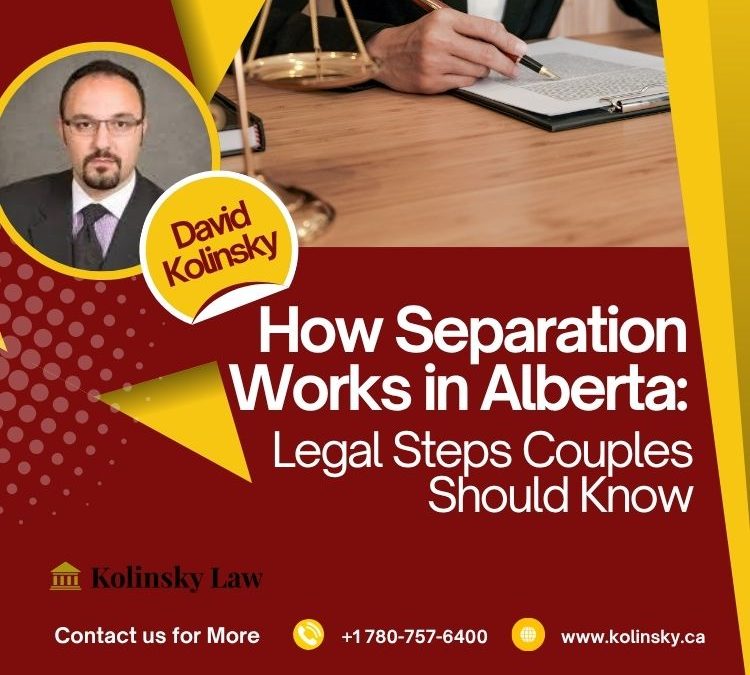
Separation can have significant legal and financial consequences for couples in Alberta. While many people associate the end of a relationship with divorce, separation often marks the beginning of the legal process and can affect issues such as parenting arrangements, child support, spousal support, and property division.
Understanding how separation works under Alberta law can help individuals make informed decisions, protect their rights, and prepare for the steps that may follow. This article explains the key legal considerations couples should be aware of when navigating separation in Alberta.
Unsure whether your situation qualifies as A legal separation? Contact Kolinsky Law today at +1 (780)-757-6400 for trusted guidance.
What Does Separation Mean in Alberta?
A legal separation arises when spouses or adult interdependent partners determine that their relationship has ended and begin living separately, either physically or functionally. Contrary to popular belief, there is no legal requirement to file paperwork to become separated. The separation begins when at least one partner communicates that the relationship has ended and acts accordingly.
Some couples continue living under the same roof due to financial circumstances while still being legally separated. In such situations, factors such as separate finances, independent living arrangements, and the absence of a marital relationship may be considered when determining the date of separation.
Protect your rights from day one—speak with our family law team.
Establishing the Date of Separation
The separation date is an important legal milestone because it can affect property division, support obligations, and future divorce proceedings. Disagreements about when the separation occurred can create complications later.
Keeping records of conversations, written communications, financial changes, or living arrangements can help establish the correct date if questions arise. At Kolinsky Law, we regularly help clients document and protect their legal position from the earliest stages of separation.
Learn how we can help protect your parenting rights.
Addressing Parenting and Decision-Making Responsibilities
When children are involved, parents must determine where the children will live, how parenting time will be shared, and who will make significant decisions regarding education, healthcare, and other important matters.
Alberta courts focus on the best interests of the child rather than the preferences of either parent. Courts may consider the child’s needs, stability, relationships with each parent, and each parent’s ability to provide care.
Working toward a practical parenting arrangement early can reduce conflict and create consistency for children during a difficult transition. If disagreements arise, guidance from a Child Custody Lawyer in Edmonton, Alberta, families trust can help clarify available legal options.
Get clarity on support obligations before making decisions—call +1 (780)-757-6400 today.
Understanding Child and Spousal Support
Separation does not eliminate financial responsibilities between family members. Child support is generally determined according to established guidelines and is based primarily on the paying parent’s income and the number of children involved.
Spousal support may also be payable depending on factors such as the length of the relationship, financial circumstances, and the roles each partner played during the relationship. Every family situation is unique, and support obligations should be carefully evaluated before any agreement is finalized.
Speak with an experienced family lawyer before dividing assets or debts.
Dividing Property and Debts
Property division is often one of the most contested aspects of separation. Alberta law provides rules governing how assets and debts are distributed when a relationship ends.
Common issues include family homes, vehicles, investments, pensions, business interests, and outstanding debts. Determining what qualifies as family property and what may be exempt requires a detailed legal assessment.
A well-structured separation agreement can help prevent future disputes and provide certainty regarding financial matters.
Ensure your separation agreement protects your future—contact our team at [email protected].
Creating a Separation Agreement
Although not legally required, a written separation agreement is one of the most effective tools available to separating couples. The agreement can address parenting arrangements, support obligations, property division, debt allocation, and other important matters.
An enforceable agreement should be carefully drafted and reviewed to ensure both parties fully understand their rights and obligations. Seeking independent legal advice can significantly reduce the risk of future challenges.
Schedule a confidential consultation today, and move forward with confidence.
When Should You Speak With a Lawyer?
The decisions made during separation often have long-term consequences. Obtaining legal advice early can help you understand your rights, protect your financial interests, and develop a practical path forward.
Whether you are facing parenting disputes, support concerns, or complex property issues, our team at Kolinsky Law is committed to helping families navigate separation with clarity and confidence. As experienced Family Law Lawyers Edmonton residents rely on we work to achieve practical solutions that support our clients’ long-term goals while minimizing unnecessary conflict.
To discuss your situation, call +1 (780)-757-6400. You can also read our clients’ 5-star reviews.
FAQs
Q1. Do I need to file legal paperwork to become separated in Alberta?
A1. No. Alberta does not require couples to file paperwork to become legally separated. Separation generally begins when one spouse communicates that the relationship has ended, and both parties begin living separately, either physically or functionally.
Q2. Can spouses be separated while living in the same home?
A2. Yes. Couples may remain under the same roof due to financial or family circumstances while still being legally separated if they live independent lives and no longer maintain a marital relationship.
Q3. Why is the separation date important in Alberta?
A3. The separation date can affect property division, support obligations, and future divorce proceedings. Accurately documenting the date can help prevent legal disputes later.
Q4. How is child custody determined after separation?
A4. Alberta courts focus on the best interests of the child when making parenting decisions. Factors include the child’s needs, stability, relationships with parents, and each parent’s ability to provide care.
Q5. Is child support mandatory after separation?
A5. In most cases, yes. Child support is generally determined according to the Federal Child Support Guidelines and is based primarily on income and parenting arrangements.
Q6. Can I receive spousal support after separation?
A6. Possibly. Eligibility for spousal support depends on factors such as the length of the relationship, financial circumstances, and contributions made during the relationship.
Q7. How is property divided after separation in Alberta?
A7. Property division is governed by Alberta family law legislation and may include homes, investments, pensions, businesses, vehicles, and debts. Each case requires an individual assessment.
Q8. What should be included in a separation agreement?
A8. A separation agreement may address parenting arrangements, child support, spousal support, property division, debt allocation, and dispute-resolution procedures.
Q9. Is a separation agreement legally enforceable?
A9. Yes, provided it is properly drafted, both parties understand its terms, and each person has had the opportunity to obtain independent legal advice.
Q10. When should I contact a family lawyer after separation?
A10. It is generally advisable to seek legal advice as early as possible to understand your rights, preserve evidence, protect assets, and avoid costly mistakes.
Q11. Can separation affect future divorce proceedings?
A11. Yes. Decisions made during separation often influence future divorce matters, including parenting, support, and property division.
Q12. How can Kolinsky Law help during separation?
A12. Kolinsky Law assists clients with separation agreements, child custody disputes, parenting plans, support issues, property division, negotiations, and court representation throughout Alberta.
About the Best Child Custody Lawyer in Edmonton – David Kolinsky
David Kolinsky has built a strong reputation for providing strategic, compassionate, and results-driven family law representation throughout Edmonton and surrounding communities. Whether you are navigating separation, divorce, child custody disputes, parenting arrangements, child support, spousal support, or property division, David Kolinsky and his team are committed to protecting your rights and helping you achieve the best possible outcome.
At Kolinsky Law, we understand that separation can be emotionally and financially challenging. Our firm provides clear legal guidance, practical solutions, and dedicated advocacy tailored to your unique circumstances. From negotiating fair settlements to representing clients in court when necessary, we work tirelessly to help families move forward with confidence.
by admin | May 31, 2026 | Best Lawyer for Family Disputes, Child Custody, Divorce and Separation, Spousal Support
Dividing property during a divorce is rarely straightforward. Many people assume every bank account, investment, or asset will automatically be split equally after separation. In Alberta, that is not always the case. Certain types of money and property may remain exempt from division if they meet specific legal requirements.
Understanding which assets may be protected can help individuals make informed financial decisions before and during divorce proceedings. Whether the issue involves inheritances, personal injury settlements, or pre-marital assets, proper documentation often plays a major role in determining what remains protected.
Unsure whether your assets may be exempt? Contact Kolinsky Law at (780) 757-6400 for trusted legal guidance.
Inheritances and Gifts
In Alberta, inheritances and gifts received from third parties are often considered exempt property. This means money or property inherited from parents, relatives, or other individuals may not be divided during divorce.
However, exemptions are not always automatic. If inherited funds are mixed with joint bank accounts or used to purchase shared assets, tracing the original money can become difficult. Many Edmonton Divorce Lawyers advise clients to keep inheritances separate and maintain detailed financial records.
For example, depositing inherited funds into a joint savings account used for household expenses may weaken the claim that the money should remain exempt.
Protect your inheritance rights—speak with our divorce lawyers today.
Property Owned Before Marriage
Assets owned before marriage may also qualify for exemption. A home, investment account, or business acquired before the relationship began may remain partially protected during property division.
Still, any increase in value during the marriage could become divisible. If a property appreciated significantly while both spouses contributed financially or indirectly, courts may examine whether part of the increased value should be shared.
A knowledgeable Divorce Attorney in Edmonton can help assess how the exempt property rules apply to real estate, retirement accounts, and business interests.
Get clarity on pre-marital assets before negotiations begin—contact Kolinsky Law today.
Personal Injury Settlements
Certain personal injury settlements may remain protected in divorce proceedings. Compensation intended for pain, suffering, or future medical care is often treated differently from ordinary marital assets.
However, the exempt portion depends on how settlement funds were used. If compensation money was invested in a jointly owned property or a shared account, disputes may arise over whether the exemption still applies.
Working with a family divorce lawyer in Edmonton can help you gather financial records and settlement documentation to support exemption claims.
Get clarity on pre-marital assets before negotiations begin—contact Kolinsky Law today.
Insurance Proceeds and Compensation
Some insurance payments may also qualify as exempt property. Life insurance proceeds, disability benefits, or compensation linked to specific personal losses can sometimes remain outside the division process.
Courts generally evaluate the purpose of the payment and whether it directly benefited one spouse personally or supported the family financially. These situations can become complicated when insurance proceeds are used for mortgage payments, investments, or shared living expenses.
Learn how Alberta courts may treat insurance proceeds during divorce—call (780) 757-6400 today.
Why Documentation Matters
One of the biggest mistakes people make during divorce is failing to preserve financial records. Bank statements, trust documents, inheritance paperwork, and property records may all become essential when proving an exemption claim.
Without proper evidence, assets originally considered exempt could be treated as divisible marital property. This is especially important in high-asset divorces involving businesses, investment portfolios, or multiple properties.
Many individuals searching for the Best Divorce Lawyers in Edmonton Alberta are often trying to protect significant financial interests while avoiding unnecessary litigation.
Need help organizing financial evidence? Contact our experienced family law team for guidance.
When Legal Advice Becomes Important
Property division disputes can quickly become financially and emotionally stressful. Even assets that appear clearly exempt may become contested if funds were shared, transferred, or used jointly during the marriage.
At Kolinsky Law, we help clients understand how Alberta property division laws apply to their specific circumstances. Our team works with individuals seeking guidance from Divorce and Custody Lawyers, Child & Spousal Support Lawyers in Edmonton and experienced Family Lawyers whom Edmonton clients rely on during complex separations.
Whether you are protecting inherited property, reviewing financial records, or negotiating a settlement, understanding your legal rights early can make a significant difference during divorce proceedings.
Book a consultation today through email – [email protected] to discuss your divorce matter.
FAQs
Q1. What money is exempt from divorce in Alberta?
A1. In Alberta, inheritances, gifts from third parties, certain personal injury settlements, insurance proceeds, and some pre-marital assets may qualify as exempt property under specific circumstances.
Q2. Can an inheritance be divided during a divorce?
A2. An inheritance may remain exempt if it is kept separate and properly documented. However, commingling inherited funds with joint assets can affect exemption claims.
Q3. Is property owned before marriage protected in Alberta?
A3. Property owned before marriage may be exempt, but any increase in value during the relationship could potentially be subject to division.
Q4. Are personal injury settlements considered matrimonial property?
A4. Not always. Compensation for pain, suffering, or future medical care may be exempt, depending on how the funds were used and documented.
Q5. Can insurance proceeds be protected during divorce proceedings?
A5. Certain insurance benefits, including life insurance proceeds and disability payments, may qualify as exempt property depending on their purpose and use.
Q6. What happens if exempt funds are deposited into a joint account?
A6. Mixing exempt funds with marital assets can make tracing difficult and may reduce the likelihood of maintaining the exemption.
Q7. How do I prove an asset is exempt during divorce?
A7. Documentation such as bank statements, trust records, inheritance paperwork, settlement agreements, and property records can help establish exemption claims.
Q8. Should I hire a lawyer for property division disputes?
A8. Yes. Property division laws can be complex, and a family lawyer can help protect your financial interests and ensure exempt assets are properly identified.
Call today (780) 757-6400 to discuss your divorce matter.
About the Family Divorce Lawyer Edmonton – David Kolinsky
David Kolinsky is an experienced Family Divorce Lawyer Edmonton residents trust for practical, strategic, and results-focused legal guidance. He assists clients with divorce, separation, property division, child custody, parenting arrangements, child support, spousal support, and complex family law disputes throughout Alberta. At Kolinsky Law, we understand that every family situation is unique, which is why we provide personalized legal solutions designed to protect your rights, assets, and future. Whether you are concerned about exempt property, negotiating a settlement, or preparing for court proceedings, our team is committed to helping you navigate the process with confidence.
How We Can Help
- Assess whether your assets qualify as exempt property.
- Review inheritance, gift, settlement, and property records.
- Protect your financial interests during divorce negotiations.
- Resolve property division disputes efficiently.
- Represent you in mediation, negotiations, and court proceedings.
- Provide strategic family law advice tailored to your circumstances.
To learn more about how we can help, call +1 (780) 757-6400, email [email protected], visit https://kolinsky.ca/, or complete our contact form at https://kolinsky.ca/contact/. You can also read our clients’ 5-star reviews at https://g.page/kolinskylaw.
#DivorceLawyerEdmonton #FamilyLawEdmonton #AlbertaDivorce #PropertyDivision #DivorceAdvice #FamilyLawyer #DivorceSettlement #AssetProtection #EdmontonLawyer #LegalAdviceCanada #DivorceSupport #AlbertaFamilyLaw #SeparationAgreement #DivorceRights #ChildSupport #SpousalSupport #MatrimonialProperty #DivorceHelpCanada #KolinskyLaw #DavidKolinsky