by admin | Oct 15, 2026 | Blog, Child Custody, Child Custody Lawyer, Holiday Parenting Schedule, Parenting Time, Travel Consent Letter, Winter Break
For separated parents, the holiday season can bring as much stress as joy. Who has the children on Christmas Eve? Who gets New Year’s? Can one parent take the kids to see grandparents in another province — or overseas — over winter break?
The best time to answer these questions is now, not in mid-December. Holiday disputes that start late often end in rushed, expensive emergency applications. As an experienced Child Custody Lawyer in Edmonton, David Kolinsky helps parents put clear, child-focused holiday plans in place well before the season begins.
📞 Need a holiday parenting plan in place before December? Call Kolinsky Law at +1 (780)-757-6400.
How Alberta Courts Approach Holiday Parenting Time
Under both the federal Divorce Act and Alberta’s Family Law Act, every parenting decision is based on the best interests of the child. For holidays, that usually means:
- Children should have meaningful time with both parents over important occasions
- Family traditions and extended family relationships matter
- Stability is important — the holiday plan should not throw a child’s routine into chaos
- A child’s age and wishes may be considered, depending on maturity
Holiday terms in a parenting order usually override the regular weekly schedule for the dates they cover, so the wording matters.
🌐 Learn more about parenting arrangements: Visit our Child Custody page
Common Holiday Parenting Schedules
There is no single “right” schedule. The most common options include:
- Alternating years: One parent has Christmas in even years, the other in odd years. Simple and predictable.
- Splitting the day: Christmas Eve to Christmas morning with one parent, Christmas afternoon onward with the other. Works best when parents live close together.
- Splitting winter break in half: Each parent gets one uninterrupted week, with the switch date alternating each year.
- Fixed holidays: Each parent always has the same holiday — useful when families celebrate different traditions or faiths.
- Long-distance plans: One parent has most of winter break in exchange for other holidays, such as spring break or extended summer time.
Whichever model you choose, spell out exact dates, times and exchange locations — vague terms like “half of Christmas” invite conflict.
📝 Want help drafting a clear holiday schedule? Fill out our contact form.
Holiday Travel With Your Children
Travel is one of the most common holiday flashpoints. Before booking anything, check your parenting order or agreement for travel terms. Good practice includes:
- Giving written notice of travel dates, destinations and accommodation well in advance
- Getting written consent from the other parent for out-of-province or international trips
- Carrying a consent letter when travelling abroad without the other parent — the Government of Canada recommends one, and border officials may ask for it
- Confirming passports — a child’s passport application generally requires both guardians’ involvement unless a court order says otherwise
- Respecting the other parent’s time — a trip should not swallow the other parent’s holiday days without agreement
A short holiday trip is different from a relocation. If a move is being considered, separate notice rules apply — speak to a lawyer early.
📧 Planning holiday travel with your children? Email [email protected] for advice.
What If Your Ex Won’t Follow the Holiday Schedule?
If the other parent refuses to return the children, withholds holiday time, or changes plans at the last minute:
- Stay calm in front of the children and avoid confrontations at exchanges.
- Document everything — dates, messages and missed exchanges.
- Communicate in writing through text, email or a co-parenting app.
- Speak to a lawyer promptly. Courts can order make-up parenting time, enforce an existing order and, in serious cases, impose further consequences.
Under Alberta’s Family-Focused Protocol, urgent parenting issues may still be brought before the court quickly — but the earlier you act, the more options you have.
📞 Holiday time being withheld? Call +1 (780)-757-6400 right away.
Tips for a Calmer Holiday Season for Your Children
- Agree early — aim to confirm holiday plans by early November
- Keep children out of negotiations — never ask them to choose or carry messages
- Coordinate gifts to avoid competition or duplication
- Allow calls or video chats with the other parent on key days
- Be flexible with travel delays and weather — an Alberta winter can disrupt exchanges
⭐ See why families trust our custody team — read our 5-star Google reviews.
How Kolinsky Law Can Help
At Kolinsky Law, our Child Custody Lawyers in Edmonton help parents create and enforce holiday arrangements that work for real families. We:
- Draft detailed holiday and travel terms for parenting plans and orders
- Negotiate holiday schedules through mediation or collaborative law
- Prepare travel consent and notice documents
- Bring urgent applications when holiday time is withheld
- Vary outdated parenting orders that no longer fit your family
📝 Get your holiday plan settled now — contact our child custody team.
About the Lawyer – David Kolinsky – Child Custody Lawyer in Edmonton
David Kolinsky is the founder and principal lawyer of Kolinsky Law, a results-driven family law practice in Edmonton, Alberta. An Edmonton native, David earned his Juris Doctor from the University of Toronto and practised law in Ontario from 2005 to 2012 before returning to Alberta in 2013. He is a member of both the Alberta and Ontario Bars and has extensive experience representing clients at the trial and appellate levels. David helps parents through every type of parenting dispute — from building first parenting plans to enforcing orders and handling child mobility cases — always with a focus on the child’s best interests and practical, lasting solutions.
🌐 Learn more about our firm at kolinsky.ca.
Frequently Asked Questions
Q1. How is Christmas usually divided between separated parents in Alberta?
A1. Common options are alternating Christmas each year, splitting Christmas Eve and Christmas Day, or dividing winter break in half. The right choice depends on your children’s ages, distance between homes and family traditions.
Q2. Does the holiday schedule override the regular parenting schedule?
A2. Usually, yes. Most parenting orders state that holiday terms take priority over the regular schedule for the dates they cover. Check the exact wording of your order or agreement.
Q3. Do I need the other parent’s permission to travel with my child over the holidays?
A3. It depends on your parenting order, but for out-of-province or international travel, written consent is strongly recommended. A consent letter is advised whenever a child travels abroad without the other parent.
Q4. What can I do if my ex keeps the children over my holiday time?
A4. Document what happened and contact a lawyer promptly. Alberta courts can enforce parenting orders and order make-up time, and urgent matters can be brought forward quickly.
Q5. Can my child decide where to spend Christmas?
A5. A child’s wishes can be considered, with more weight given as children get older and more mature, but the final decision is based on the child’s best interests.
Q6. What if we don’t have a parenting order yet?
A6. You can still reach a written holiday agreement through negotiation or mediation. If you cannot agree, a court can make an order — starting early avoids last-minute stress.
Q7. Do I need a child custody lawyer in Edmonton for a holiday schedule?
A7. A lawyer helps you draft clear, enforceable terms, handle travel and consent issues, and act quickly if the other parent does not follow the plan.
📧 More questions? Email [email protected] — we’re here to help.
Give Your Children a Peaceful Holiday Season
A clear holiday parenting plan gives children something every family wants this time of year — certainty and calm. Start the conversation early and get the terms in writing.
📞 Talk to an Edmonton child custody lawyer today: +1 (780)-757-6400.
For compassionate, practical guidance on every parenting issue, let Kolinsky Law be your trusted partner this holiday season and beyond.
#ChildCustodyLawyerEdmonton #HolidayParenting #CoParentingChristmas #ParentingPlan #ChildCustodyAlberta #SeparatedParents #WinterBreak #CoParenting #EdmontonFamilyLawyer #ParentingTime #DivorceAndHolidays #TravelConsentLetter #KolinskyLaw #YEGLaw #YEG #AlbertaFamilyLaw #BestInterestsOfTheChild #HolidaysAfterDivorce #FamilyFirst #KidsFirst
by admin | Jul 19, 2026 | Blog, Child Custody, Child Custody Lawyer, Family Attorney, Family Law Lawyer, Family Lawyer
Parenting orders are legally binding court orders that establish parenting time, decision-making responsibilities, and other arrangements concerning children after a separation or divorce. These orders are intended to provide stability for children and clarity for parents. However, disputes can arise when one parent repeatedly fails to comply with the terms of the order.
A parent’s failure to comply with a parenting order can create significant challenges. Knowing your legal options under Alberta law can help you address the situation effectively while protecting your child’s best interests.
📞 Need immediate guidance? Call the Best Family Lawyer in Edmonton at +1 (780)-757-6400.
Confirm the Nature of the Violation
Not every disagreement amounts to a breach of a parenting order. Before taking legal action, carefully review the order and identify how it is being violated. Common issues include denying parenting time, repeatedly returning a child late, refusing to share important information about the child, or making major decisions without the required consent of the other parent.
Understanding the specific terms of the order is essential because enforcement measures typically depend on the nature and severity of the violation.
📩 Unsure if it’s a breach? Ask Edmonton’s Top Child Custody Lawyer — email [email protected] today.
Keep Detailed Records
Documentation can play a critical role if the dispute escalates. Parents should keep records of missed parenting exchanges, cancelled visits, unanswered communications, and any other incidents involving non-compliance.
Written communication such as emails, text messages, and parenting app records may help demonstrate a pattern of behaviour. Maintaining accurate records can provide valuable evidence in the event of a court dispute and assist a Child Custody Lawyer Edmonton Alberta families rely on in building a strong case.
📝 Start building your case the right way — visit our Child Custody Page.
Attempt to Resolve the Issue
In some situations, non-compliance may result from misunderstandings, scheduling conflicts, or communication breakdowns rather than intentional misconduct. Before pursuing formal legal remedies, it may be worthwhile to address the issue directly with the other parent calmly and professionally.
A respectful discussion can sometimes resolve the problem and prevent unnecessary conflict. However, parents should avoid confrontational behaviour or actions that could worsen the situation or negatively affect the child.
💬 Not sure how to approach the conversation? Get advice from the Best Lawyer for Child Custody in Edmonton.
Consider Mediation or Alternative Dispute Resolution
When communication becomes difficult, mediation or other forms of dispute resolution may help parents reach practical solutions without returning to court. A neutral third party can facilitate discussions and assist both parents in identifying workable arrangements.
Alternative dispute resolution can often preserve co-parenting relationships while reducing the emotional and financial costs associated with litigation.
🤝 Explore mediation options with a Family Lawyer in Edmonton — call +1 (780)-757-6400.
Seeking Court Enforcement
If informal efforts fail and the violations continue, court enforcement may be necessary. Alberta courts have the authority to enforce parenting orders and address repeated non-compliance.
Depending on the circumstances, the court may order makeup parenting time, require participation in parenting programs, impose conditions on future parenting arrangements, or take other measures designed to encourage compliance. In serious cases, ongoing violations may influence future decisions regarding parenting responsibilities.
Courts generally focus on what is in the child’s best interests rather than punishing either parent. As a result, any enforcement action will typically be evaluated through that lens.
⚖️ Ready to pursue enforcement? Speak with the Best Child Custody Lawyer Edmonton parents trust.
Avoid Taking Matters Into Your Own Hands
When a parenting order is being ignored, it can be tempting to respond by withholding parenting time or refusing to comply with your own obligations. However, taking unilateral action may create additional legal complications and could negatively affect your position before the court.
Parents should continue following the terms of the order whenever possible while pursuing appropriate legal remedies. Seeking guidance from experienced Family Lawyers Edmonton families trust can help ensure that your response remains legally sound.
🛑 Don’t risk your case — get sound legal advice first. Request a callback.
When to Seek Legal Advice
Repeated violations of a parenting order can place significant strain on both parents and children. Legal advice may be particularly important when non-compliance becomes frequent, affects the child’s well-being, or involves serious concerns regarding safety or decision-making authority.
At Kolinsky Law, we help parents understand their rights, evaluate enforcement options, and take appropriate legal action when parenting orders are not being respected. Addressing violations promptly can help preserve stability for children and reduce the risk of more serious disputes in the future.
📌 Protect your child’s future — visit https://kolinsky.ca/ or call +1 (780)-757-6400 today.
FAQs
Q1. What should I do if my ex is not following our parenting order in Alberta?
A1. Start by confirming whether the behaviour is actually a violation of the order’s specific terms, then keep detailed records of every incident. Try resolving the issue directly or through mediation before pursuing court enforcement. If violations continue, consult the Best Child Custody Lawyer Edmonton offers to discuss enforcement options.
Q2. Can I withhold parenting time if my ex violates the order?
A2. No. Taking unilateral action, such as withholding parenting time, can create legal complications and may weaken your position in court. Continue following the order while pursuing appropriate legal remedies through a Family Lawyer in Edmonton.
Q3. What counts as a violation of a parenting order?
A3. Common violations include denying scheduled parenting time, repeatedly returning a child late, withholding important information about the child, or making major decisions without the other parent’s required consent.
Q4. What evidence do I need to prove my ex is violating the parenting order?
A4. Keep records of missed exchanges, cancelled visits, unanswered messages, and any related written communication, including emails, texts, and parenting app logs. This documentation helps demonstrate a pattern of non-compliance if the matter goes to court.
Q5. Will the court punish my ex for violating the parenting order?
A5. Alberta courts focus primarily on the child’s best interests rather than punishing a parent. However, enforcement measures may include makeup parenting time, mandatory parenting programs, or conditions on future arrangements, and repeated violations can influence future custody decisions.
Q6. When should I hire a lawyer for parenting order violations?
A6. You should seek legal advice when non-compliance becomes frequent, affects your child’s well-being, or raises safety or decision-making concerns. Edmonton’s Top Child Custody Lawyer, David Kolinsky, can help you evaluate your options and take appropriate legal action.
Q7. How can Kolinsky Law help with parenting order enforcement?
A7. Kolinsky Law helps parents confirm violations, gather evidence, pursue mediation, and file for court enforcement when necessary. Contact the Best Lawyer for Child Custody in Edmonton at +1 (780)-757-6400 or [email protected] to discuss your case.
⭐ Read our clients’ 5-star reviews.
About Edmonton’s Top Child Custody Lawyer — David Kolinsky
David Kolinsky is widely regarded as the Best Child Custody Lawyer Edmonton families turn to when parenting disputes become complicated. With extensive experience handling parenting order violations, enforcement applications, and complex custody matters, David and the team at Kolinsky Law are committed to protecting children’s best interests while guiding parents through every stage of the legal process.
Whether you need help confirming a breach, gathering evidence, pursuing mediation, or filing for court enforcement, Kolinsky Law offers clear, compassionate, and strategic legal support. As the Best Family Lawyer in Edmonton, David Kolinsky works closely with each client to build a tailored plan that safeguards both their parental rights and their child’s well-being.
📞 Call: +1 (780)-757-6400 | 📩 Email: [email protected] | 📝 Contact Us: https://kolinsky.ca/contact/
#ParentingOrder #ChildCustodyEdmonton #FamilyLawEdmonton #CoParenting #CustodyLawyerEdmonton #EdmontonFamilyLawyer #ParentingTimeDispute #AlbertaFamilyLaw #ChildCustodyLawyer #KolinskyLaw #DavidKolinsky #FamilyLawAlberta #DivorceLawEdmonton #CourtEnforcement #ChildrensBestInterests
by admin | Jun 24, 2026 | Child Custody Lawyer, Divorce Lawyer, Family Attorney, Family Lawyer
Separation can have significant legal and financial consequences for couples in Alberta. While many people associate the end of a relationship with divorce, separation often marks the beginning of the legal process and can affect issues such as parenting arrangements, child support, spousal support, and property division.
Understanding how separation works under Alberta law can help individuals make informed decisions, protect their rights, and prepare for the steps that may follow. This article explains the key legal considerations couples should be aware of when navigating separation in Alberta.
Unsure whether your situation qualifies as A legal separation? Contact Kolinsky Law today at +1 (780)-757-6400 for trusted guidance.
What Does Separation Mean in Alberta?
A legal separation arises when spouses or adult interdependent partners determine that their relationship has ended and begin living separately, either physically or functionally. Contrary to popular belief, there is no legal requirement to file paperwork to become separated. The separation begins when at least one partner communicates that the relationship has ended and acts accordingly.
Some couples continue living under the same roof due to financial circumstances while still being legally separated. In such situations, factors such as separate finances, independent living arrangements, and the absence of a marital relationship may be considered when determining the date of separation.
Protect your rights from day one—speak with our family law team.
Establishing the Date of Separation
The separation date is an important legal milestone because it can affect property division, support obligations, and future divorce proceedings. Disagreements about when the separation occurred can create complications later.
Keeping records of conversations, written communications, financial changes, or living arrangements can help establish the correct date if questions arise. At Kolinsky Law, we regularly help clients document and protect their legal position from the earliest stages of separation.
Learn how we can help protect your parenting rights.
Addressing Parenting and Decision-Making Responsibilities
When children are involved, parents must determine where the children will live, how parenting time will be shared, and who will make significant decisions regarding education, healthcare, and other important matters.
Alberta courts focus on the best interests of the child rather than the preferences of either parent. Courts may consider the child’s needs, stability, relationships with each parent, and each parent’s ability to provide care.
Working toward a practical parenting arrangement early can reduce conflict and create consistency for children during a difficult transition. If disagreements arise, guidance from a Child Custody Lawyer in Edmonton, Alberta, families trust can help clarify available legal options.
Get clarity on support obligations before making decisions—call +1 (780)-757-6400 today.
Understanding Child and Spousal Support
Separation does not eliminate financial responsibilities between family members. Child support is generally determined according to established guidelines and is based primarily on the paying parent’s income and the number of children involved.
Spousal support may also be payable depending on factors such as the length of the relationship, financial circumstances, and the roles each partner played during the relationship. Every family situation is unique, and support obligations should be carefully evaluated before any agreement is finalized.
Speak with an experienced family lawyer before dividing assets or debts.
Dividing Property and Debts
Property division is often one of the most contested aspects of separation. Alberta law provides rules governing how assets and debts are distributed when a relationship ends.
Common issues include family homes, vehicles, investments, pensions, business interests, and outstanding debts. Determining what qualifies as family property and what may be exempt requires a detailed legal assessment.
A well-structured separation agreement can help prevent future disputes and provide certainty regarding financial matters.
Ensure your separation agreement protects your future—contact our team at [email protected].
Creating a Separation Agreement
Although not legally required, a written separation agreement is one of the most effective tools available to separating couples. The agreement can address parenting arrangements, support obligations, property division, debt allocation, and other important matters.
An enforceable agreement should be carefully drafted and reviewed to ensure both parties fully understand their rights and obligations. Seeking independent legal advice can significantly reduce the risk of future challenges.
Schedule a confidential consultation today, and move forward with confidence.
When Should You Speak With a Lawyer?
The decisions made during separation often have long-term consequences. Obtaining legal advice early can help you understand your rights, protect your financial interests, and develop a practical path forward.
Whether you are facing parenting disputes, support concerns, or complex property issues, our team at Kolinsky Law is committed to helping families navigate separation with clarity and confidence. As experienced Family Law Lawyers Edmonton residents rely on we work to achieve practical solutions that support our clients’ long-term goals while minimizing unnecessary conflict.
To discuss your situation, call +1 (780)-757-6400. You can also read our clients’ 5-star reviews.
FAQs
Q1. Do I need to file legal paperwork to become separated in Alberta?
A1. No. Alberta does not require couples to file paperwork to become legally separated. Separation generally begins when one spouse communicates that the relationship has ended, and both parties begin living separately, either physically or functionally.
Q2. Can spouses be separated while living in the same home?
A2. Yes. Couples may remain under the same roof due to financial or family circumstances while still being legally separated if they live independent lives and no longer maintain a marital relationship.
Q3. Why is the separation date important in Alberta?
A3. The separation date can affect property division, support obligations, and future divorce proceedings. Accurately documenting the date can help prevent legal disputes later.
Q4. How is child custody determined after separation?
A4. Alberta courts focus on the best interests of the child when making parenting decisions. Factors include the child’s needs, stability, relationships with parents, and each parent’s ability to provide care.
Q5. Is child support mandatory after separation?
A5. In most cases, yes. Child support is generally determined according to the Federal Child Support Guidelines and is based primarily on income and parenting arrangements.
Q6. Can I receive spousal support after separation?
A6. Possibly. Eligibility for spousal support depends on factors such as the length of the relationship, financial circumstances, and contributions made during the relationship.
Q7. How is property divided after separation in Alberta?
A7. Property division is governed by Alberta family law legislation and may include homes, investments, pensions, businesses, vehicles, and debts. Each case requires an individual assessment.
Q8. What should be included in a separation agreement?
A8. A separation agreement may address parenting arrangements, child support, spousal support, property division, debt allocation, and dispute-resolution procedures.
Q9. Is a separation agreement legally enforceable?
A9. Yes, provided it is properly drafted, both parties understand its terms, and each person has had the opportunity to obtain independent legal advice.
Q10. When should I contact a family lawyer after separation?
A10. It is generally advisable to seek legal advice as early as possible to understand your rights, preserve evidence, protect assets, and avoid costly mistakes.
Q11. Can separation affect future divorce proceedings?
A11. Yes. Decisions made during separation often influence future divorce matters, including parenting, support, and property division.
Q12. How can Kolinsky Law help during separation?
A12. Kolinsky Law assists clients with separation agreements, child custody disputes, parenting plans, support issues, property division, negotiations, and court representation throughout Alberta.
About the Best Child Custody Lawyer in Edmonton – David Kolinsky
David Kolinsky has built a strong reputation for providing strategic, compassionate, and results-driven family law representation throughout Edmonton and surrounding communities. Whether you are navigating separation, divorce, child custody disputes, parenting arrangements, child support, spousal support, or property division, David Kolinsky and his team are committed to protecting your rights and helping you achieve the best possible outcome.
At Kolinsky Law, we understand that separation can be emotionally and financially challenging. Our firm provides clear legal guidance, practical solutions, and dedicated advocacy tailored to your unique circumstances. From negotiating fair settlements to representing clients in court when necessary, we work tirelessly to help families move forward with confidence.
by admin | Apr 7, 2026 | Blog, Child Custody, Child Custody Lawyer
Introduction
Parenting arrangements after separation are designed to ensure that both parents maintain a meaningful relationship with their child. These arrangements typically outline when each parent will spend time with the child and when the child must be returned. Problems arise when one parent refuses to return the child after visitation or parenting time. This situation can create emotional stress and legal uncertainty for everyone involved.
Canadian family law treats this issue seriously because it can interfere with court orders and disrupt the child’s stability. Understanding what happens in these situations helps parents respond appropriately and protect their rights.
Speak with a relocation lawyer today—call +1 (780)-757-6400
Why Returning the Child Matters Under Parenting Orders
Parenting orders and separation agreements establish clear schedules for when a child is with each parent. These arrangements are intended to provide consistency and protect the child’s relationship with both parents. When one parent refuses to return the child after visitation, it may violate a legally binding court order.
Failing to follow parenting arrangements can disrupt the child’s routine and create conflict between parents. Courts expect both parents to respect agreed schedules unless there is a genuine safety concern. Ignoring the terms of a parenting order may result in legal consequences and further court involvement.
Facing a parenting order violation? Speak to our child custody lawyer today.
Common Reasons Parents Refuse to Return a Child
In some cases, a parent may refuse to return the child because they believe the child would be unsafe or poorly cared for in the other parent’s home. Concerns about the child’s well-being can lead a parent to take immediate action without consulting the court.
However, other situations arise from misunderstandings, emotional conflict, or attempts to gain leverage in an ongoing dispute. Regardless of the reason, withholding the child without legal authority can create serious legal complications. Courts expect parents to address concerns through legal channels rather than making unilateral decisions.
Unsure if your situation is legally justified? Email us at [email protected] for guidance.
Legal Consequences of Withholding a Child
When a parent refuses to return a child in violation of a court order, the other parent may seek enforcement through the family court. Judges have several options for addressing non-compliance with parenting orders.
The court may order the immediate return of the child, modify parenting arrangements, or impose penalties if the refusal was intentional. In some situations, repeated violations can affect future custody decisions. Courts may determine that a parent who ignores parenting orders is not supporting the child’s relationship with the other parent, which can influence future rulings.
Protect your parental rights—book a consultation now.
Steps a Parent Can Take to Resolve the Situation
If a parent refuses to return a child after visitation, the first step is often to attempt to communicate calmly to clarify what has happened. Sometimes the issue may be resolved quickly if it results from a misunderstanding.
If the problem continues, legal action may be necessary. A parent can apply to the court for enforcement of the parenting order or seek emergency relief when the situation requires immediate attention. Courts prioritise solutions that restore stability for the child while ensuring that both parents follow legal parenting arrangements.
Act fast—call +1 (780)-757-6400 to explore urgent legal options.
How Legal Guidance Can Help
Disputes involving parenting time and custody require careful legal handling. When a parent refuses to return a child, it is important to understand what legal steps can be taken and how courts evaluate these situations.
At Kolinsky Law, we help parents navigate complex family law disputes involving parenting orders and custody enforcement. As experienced Child Custody Lawyer Edmonton Alberta professionals, we assist clients in protecting their parental rights while prioritising the child’s best interests. Our Family Lawyers Edmonton work closely with parents to resolve disputes and find effective legal solutions when parenting arrangements are not being respected.
Read our 5-star client reviews.
Conclusion
When one parent refuses to return a child after visitation, the situation can quickly escalate into a serious legal matter. Parenting orders exist to maintain stability and ensure that children maintain relationships with both parents. Ignoring those arrangements can lead to court enforcement and changes to custody decisions. Addressing the issue through proper legal channels is the most effective way to restore parenting arrangements and protect the child’s well-being. With the right legal guidance, parents can resolve disputes while focusing on what matters most: the child’s stability and healthy relationships with both parents.
Resolve your case with confidence—start here.
FAQ’s
Q1. What should I do if my ex refuses to return my child?
A1. You should first attempt calm communication. If unsuccessful, you can apply to the court for enforcement of the parenting order or seek urgent legal intervention.
Q2. Is refusing to return a child illegal in Canada?
A2. Yes, if it violates a court-ordered parenting arrangement, it can result in legal consequences, including enforcement orders or custody changes.
Q3. Can police get involved if a child is not returned?
A3. In some cases, especially where a court order exists, police assistance may be requested to enforce the order.
Q4. Can custody be changed if one parent withholds a child?
A4. Yes, repeated violations can negatively impact custody decisions and may result in modified parenting arrangements.
Q5. What if I believe my child is unsafe with the other parent?
A5. You should seek immediate legal advice and apply to the court rather than withholding the child unilaterally.
Q6. How quickly can the court act in these situations?
A6. Courts can provide emergency or expedited hearings when a child’s safety or stability is at risk.
About the Best Child Custody Lawyer in Edmonton – David Kolinsky
David Kolinsky is a highly experienced Child Custody Lawyer in Edmonton, known for handling complex parenting disputes with precision and care. He focuses on protecting parental rights while ensuring outcomes that align with the best interests of the child.
At Kolinsky Law, clients receive strategic legal advice, strong courtroom representation, and practical solutions for custody conflicts, parenting order enforcement, and emergency legal situations. Whether you are dealing with a non-compliant parent or seeking to modify custody arrangements, the firm provides tailored legal support every step of the way.
How We Can Help: From urgent court applications to long-term custody solutions, Kolinsky Law ensures your case is handled efficiently and effectively—contact us today to take control of your situation.
#ChildCustodyLawyer #EdmontonLawyer #FamilyLawCanada #CustodyDisputes #ParentingOrders #ChildCustodyHelp #LegalAdviceCanada #DivorceLawyerEdmonton #CustodyBattle #FamilyLawExperts #ParentalRights #LawFirmMarketing #CustodyLaw #LegalSupport #DavidKolinsky #KolinskyLaw
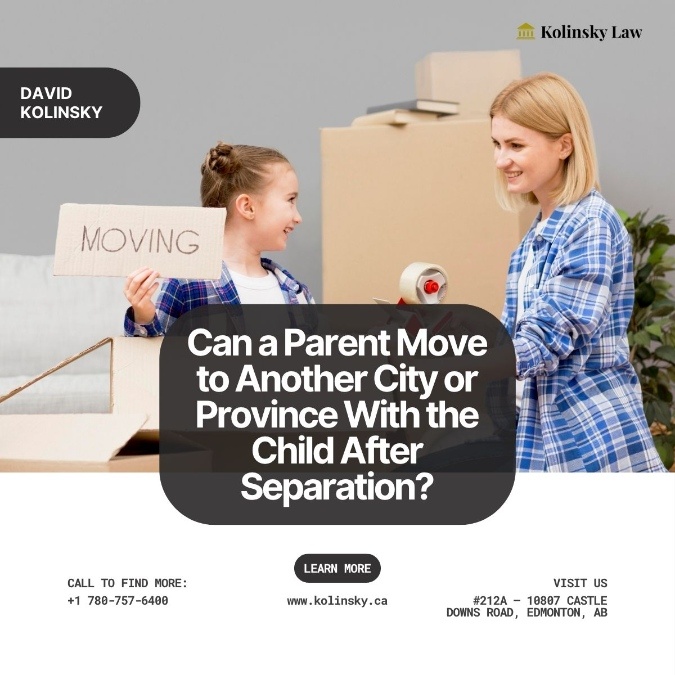
by admin | Mar 21, 2026 | Blog, Child Custody, Child Custody Lawyer, Child Relocation Laws, Divorce and Separation, Divorce Attorney, Divorce Lawyer
Introduction
After a separation, parenting arrangements often address where a child will live and how parenting time will be shared. Disagreements can arise when one parent wants to move to another city or province with the child. Relocation can change the child’s school, daily routine, and relationships with family members. It may also affect the other parent’s ability to maintain regular and meaningful contact.
Because of these potential consequences, Canadian family law treats relocation carefully. Courts examine whether a proposed move is reasonable and whether it supports the child’s overall well-being. Understanding how relocation decisions are assessed helps separated parents approach the situation responsibly and avoid unnecessary legal conflict.
Speak with a relocation lawyer today—call +1 (780)-757-6400
Does a Parent Have the Right to Move With a Child?
A parent does not automatically have the right to move with a child after separation, especially if the relocation could significantly affect the other parent’s involvement. Parenting orders and separation agreements usually establish schedules and responsibilities designed to maintain stability and preserve the child’s relationship with both parents. Moving to another city or province can disrupt these arrangements and limit regular parenting time.
Because of this impact, relocation is considered a major change under family law. If the proposed move would affect existing parenting arrangements, the issue must be addressed first so both parents can assess how the change may influence the child.
Unsure about your relocation rights? Click to get clarity now.
Notice Requirements Before Relocation
Canadian family law generally requires a parent who intends to relocate with a child to give formal notice to the other parent. The notice typically includes the proposed new location, the expected move date, and details on how parenting arrangements might change.
Providing notice serves two purposes. First, it encourages parents to discuss the relocation and attempt to reach an agreement without court involvement. Second, it allows the other parent to object if they believe the move would harm the child’s relationship with them. If no objection is raised within the required period, the relocation may proceed with updated parenting arrangements.
Need help preparing a relocation notice? Email us at [email protected] today.
How Courts Decide Relocation Cases
When parents cannot agree on relocation, the court may need to decide whether the move should be allowed. The primary legal standard in these cases is the best interests of the child. Judges consider multiple factors to determine whether relocation would benefit or harm the child.
These factors can include the child’s relationship with each parent, the child’s age and needs, the impact of the move on schooling and community ties, and whether alternative parenting arrangements can maintain meaningful contact with both parents. Courts also examine the reasons for the relocation and whether the move is being proposed in good faith.
Build a strong relocation case—book a consultation now.
What Happens If the Other Parent Objects?
If the other parent objects after receiving notice, the relocating parent may need to apply to the court for permission to move with the child. Both parents can present evidence explaining how the relocation may affect the child’s life and relationships.
The court will review parenting arrangements, communication between the parents, and the practicality of maintaining contact after the move. In some cases, courts adjust parenting schedules, travel responsibilities, or holiday arrangements to protect the child’s relationship with both parents. If the move would seriously disrupt that relationship, the court may decide that relocation should not occur.
Facing a relocation dispute? Call +1 (780)-757-6400 for immediate legal guidance.
The Importance of Legal Guidance in Relocation Disputes
Relocation disputes can be complex because they involve parenting rights, notice requirements, and careful consideration of a child’s well-being. Parents must present clear information about the proposed move, including housing, schooling, and how parenting time will continue. Legal guidance can help ensure these factors are addressed properly.
At Kolinsky Law, we help parents assess relocation issues and present their position effectively. Our experience as Best Divorce Lawyers in Edmonton Alberta helps clients navigate difficult family law matters involving parenting arrangements and relocation.
See why clients trust us—read our 5-star reviews.
Conclusion
Moving to another city or province after separation can create significant legal and emotional challenges for families. Because relocation may change parenting schedules and affect a child’s relationships, Canadian courts evaluate these situations carefully. Parents are generally required to provide notice, attempt to resolve disagreements, and focus on the child’s best interests when proposing a move. Understanding these legal principles can help separated parents make informed decisions and handle relocation issues in a way that prioritises the child’s stability and well-being.
Start your relocation case the right way—contact us now.
About the Child Relocation Lawyer Edmonton – David Kolinsky
David Kolinsky is a trusted Child Relocation Lawyer in Edmonton, helping parents navigate complex legal issues involving parenting arrangements and moves after separation. With in-depth knowledge of the Custody Relocation Laws in Alberta, Kolinsky Law provides strategic guidance on notice requirements, parental rights, and court procedures. Whether you are planning a move or responding to an objection, we help you build a strong case focused on your child’s best interests while protecting your rights every step of the way.
Get trusted legal support today: Call +1 (780)-757-6400
FAQ’s
Q1. Can a parent move to another province with a child in Canada?
A1. No, not automatically. If the move affects parenting arrangements, legal steps like notice or court approval may be required.
Q2. What is a relocation in Canadian family law?
A2. Relocation is a move that significantly impacts a child’s relationship with the other parent, often involving another city or province.
Q3. Do I need permission to move with my child after separation?
A3. Yes, if the move affects parenting time or existing agreements, you may need the other parent’s consent or court approval.
Q4. How much notice is required for child relocation in Canada?
A4. Typically, formal notice must be given with details about the move, timeline, and proposed parenting changes.
Q5. What happens if the other parent disagrees with relocation?
A5. They can object, and the court may decide whether the move is allowed based on the child’s best interests.
Q6. What factors do courts consider in relocation cases?
A6. Courts assess the child’s relationships, needs, schooling, stability, and whether the move supports their well-being.
Q7. Can a court deny relocation with a child?
A7. Yes, if the move harms the child’s relationship with the other parent or is not in their best interests.
Q8. Should I hire a lawyer for a relocation dispute?
A8. Yes, legal guidance helps protect your rights and present a strong case in court.
#ChildRelocationLawyerEdmonton #CustodyRelocationAlberta #FamilyLawEdmonton #DivorceLawyerEdmonton #RelocationLawCanada #ChildRelocationCanada #CustodyDisputesCanada #BestInterestsOfTheChild #ParentingOrdersCanada #MovingWithChildAlberta #RelocationDisputesEdmonton #LegalAdviceCanada #AlbertaFamilyLaw #DavidKolinsky #KolinskyLaw

by admin | Mar 14, 2026 | Blog, Child Custody, Child Custody Lawyer, Divorce, Divorce and Separation, Divorce Attorney, Divorce Lawyer, Family Divorce Lawyer
Understanding the Divorce Process in Alberta
Many people assume that ending a marriage always requires multiple court appearances, but that is not always the case. In Divorce Alberta matters, it is possible to complete the process without attending court if both spouses cooperate and agree on key issues. The legal system allows certain applications to be handled through paperwork and review by a judge, rather than through in-person hearings. As Family Lawyers Edmonton, we often explain that the path a divorce takes depends on the level of agreement between spouses and the complexity of the situation.
Learn how divorce works in Alberta with guidance from experienced family lawyers | Call +1 (780)-757-6400
What Is an Uncontested Divorce?
An uncontested divorce is the most common way to end a marriage without going to court. This happens when both spouses agree on the divorce itself and have resolved matters such as property division, parenting arrangements, and support payments. In Divorce cases in Edmonton like these, one spouse files the application and submits the required documents. If everything is complete and accurate, a judge can review and approve the divorce without requiring either party to appear in court. This process is often faster, less stressful, and more cost-effective than a contested case.
Start an uncontested divorce today — speak with our team or review your options here.
When Court May Not Be Necessary
Court appearances are usually not required if there are no disputes over major issues. For example, couples who have already agreed on financial matters and parenting terms can move forward through documentation alone. Even when children are involved, the court may grant the divorce without a hearing if proper arrangements for child support and care are clearly outlined. As Divorce Lawyer Alberta professionals, we emphasise that preparation and accurate paperwork play a major role in avoiding unnecessary court involvement.
Need help preparing divorce documents properly? Contact our Edmonton team. | [email protected]
Situations That May Still Require Court
While many divorces can be completed without attending court, certain situations may still lead to hearings. If spouses disagree on property division, parenting time, or support payments, the case may become contested. In these cases, a judge may need to hear arguments and review evidence before making decisions. Edmonton Contested Divorce Lawyers often deal with cases where communication breaks down, and agreements cannot be reached. Court involvement becomes necessary when disputes cannot be resolved through negotiation or written settlement.
Facing a contested divorce? Speak with an Edmonton divorce lawyer today: +1 (780)-757-6400
The Role of Agreements and Documentation
Clear agreements between spouses are key to completing a divorce without court appearances. Written arrangements about finances, children, and property help show the court that both parties have resolved important matters responsibly. A Marriage Agreement Lawyer in Edmonton may assist in drafting or reviewing separation agreements to ensure they meet legal standards.
When documents are detailed and properly prepared, judges are more likely to approve the divorce without requesting further proceedings. Accurate information and full financial disclosure also help prevent delays.
Get help preparing legally sound separation agreements.
Divorce Involving Children and Support
Even in cases that avoid court appearances, the law requires careful attention to children’s needs. Parenting arrangements, child support, and sometimes spousal support must be clearly addressed before a divorce is granted. A Child Custody Lawyer Edmonton may become involved in preparing terms that reflect the best interests of the child.
The court reviews these arrangements to confirm that financial responsibilities are properly considered. As Family Divorce Lawyer Edmonton professionals, we recognise that these decisions have long-term impacts and must be handled with clarity and care.
Need guidance on child custody or parenting agreements? Click to learn more.
How Kolinsky Law Assists in Out-of-Court Divorces
At Kolinsky Law, we help individuals understand how to move through the divorce process efficiently while minimising conflict. As Best Divorce Lawyers Edmonton, we focus on guiding clients in preparing accurate applications, organising documents, and resolving issues in advance so court appearances may not be necessary.
Acting as a Divorce Attorney Edmonton team, we emphasise practical steps that help clients complete the process smoothly. While not every divorce can be finalised without court involvement, many can be resolved through proper planning, clear communication, and well-prepared legal documentation.
You can also read our clients’ 5-star reviews here.
FAQ’s
Q1. Can you get divorced without going to court in Alberta?
A1. Yes. If both spouses agree on major issues such as property division, parenting arrangements, and support, an uncontested divorce may be approved by a judge through document review without court appearances.
Q2. What is an uncontested divorce in Edmonton?
A2. An uncontested divorce occurs when both spouses agree on the divorce and related matters. One spouse files the documents, and the court may grant the divorce without requiring a hearing.
Q3. How long does an uncontested divorce take in Alberta?
A3. Processing times vary, but uncontested divorces are generally faster than contested ones because the court only reviews submitted paperwork rather than scheduling hearings.
Q4. When is a court required for a divorce in Alberta?
A4. Court may be necessary if spouses disagree about property division, child custody, parenting time, child support, or spousal support.
Q5. Do divorces involving children require court appearances?
A5. Not always. If parenting plans and child support arrangements are clearly documented and meet legal guidelines, the court may approve the divorce without a hearing.
Q6. Do I need a lawyer for an uncontested divorce in Edmonton?
A6. While not legally required, working with a divorce lawyer helps ensure documents are accurate, agreements are legally valid, and the process moves smoothly.
Q7. What documents are required for divorce in Alberta?
A7. Typical documents include the divorce application, financial disclosure, parenting agreements (if children are involved), and supporting court forms.
#DivorceLawyerEdmonton #EdmontonDivorceLawyer #FamilyLawyerEdmonton #DivorceAlberta #AlbertaFamilyLaw #UncontestedDivorce #DivorceWithoutCourt #EdmontonFamilyLaw #ChildCustodyEdmonton #SeparationLawyer #LegalHelpEdmonton #CanadianFamilyLaw #DivorceSupportCanada #KolinskyLaw #EdmontonLawyer #DavidKolinsky